FOR INFLUENCERS & PUBLIC FIGURES
How to design YouTube thumbnails that look like you
YouTube thumbnail design for UK creators: the official specs, a recognisable template system, faces, type and colour, and how to test thumbnails properly.

A practical guide to a UK content creator's home setup: lighting a small room, clean sound, phone or camera, vertical framing and a look brands recognise.
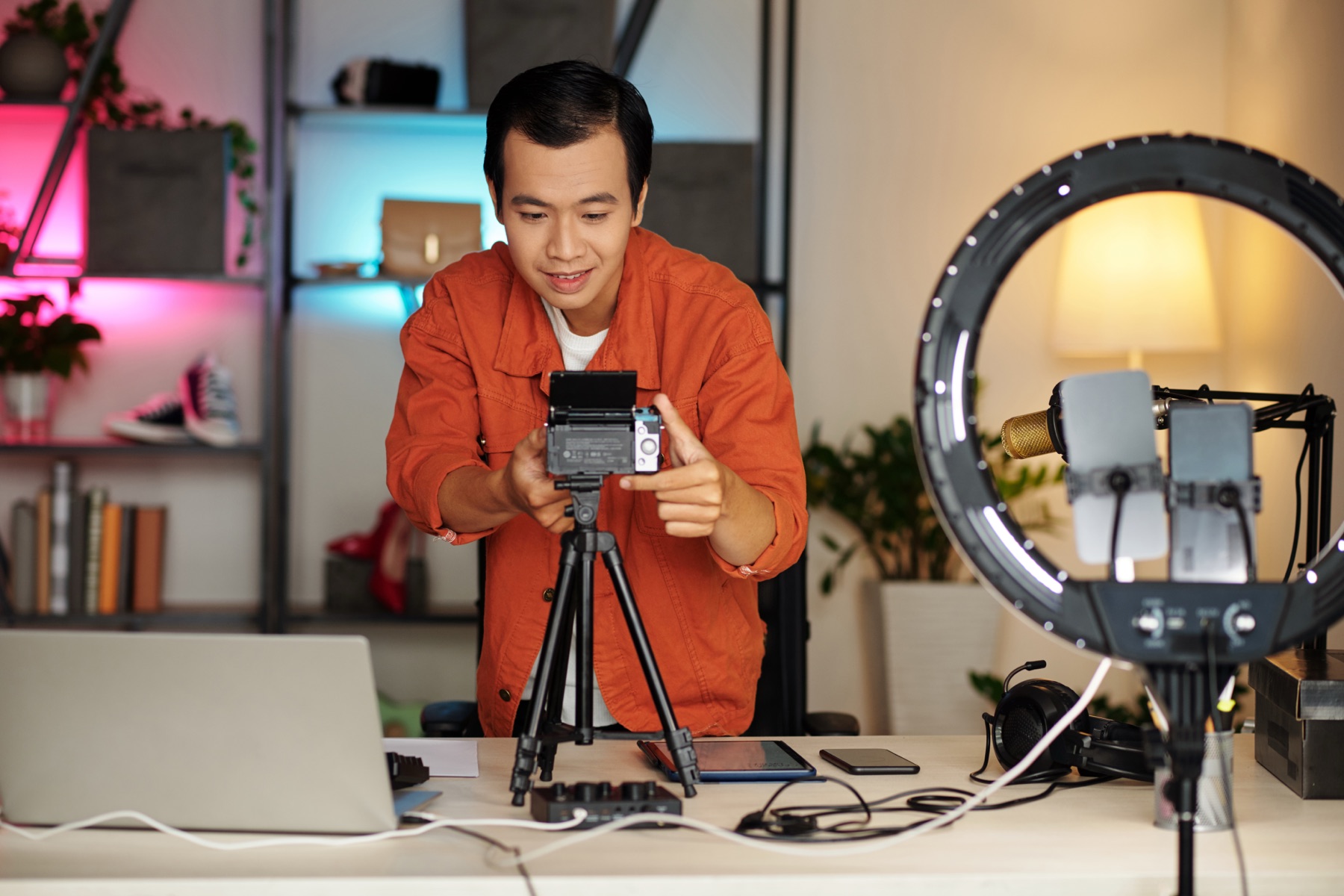
A good content creator setup is mostly about light and sound, not an expensive camera. Film facing a window or with one soft key light, use a clip-on or small shotgun microphone, steady your phone at eye level and shoot vertical at the resolution each platform expects. Keep a simple, on-brand background and a consistent look across posts. Add a professional shoot when you need images and video good enough for brands to reuse.
Picture pressing record in a corner of your home that is always ready: the light is soft and flattering, the sound is clean, the frame looks like you. A brand partner watches your latest video and sees someone they can trust with their product, and you didn’t spend the morning fighting with a lamp to get there. That ease, the feeling that your setup works for you rather than against you, is what this guide is about.
Brands, followers and the algorithm all judge your content in the first second, and most of the difference comes from a few inexpensive decisions about where you film and how you light and record it. Here is what matters, in the order it matters, with honest notes on where spending more is and isn’t worth it.
In order of impact: sound, light, stability, then camera. People will forgive slightly soft footage, but they scroll away from muffled or echoing audio. Light comes next, because it decides how sharp, clean and flattering the picture looks, whatever camera you use. A wobbling shot looks amateur in a way viewers notice immediately. Only after those three does the camera itself make much difference, and a recent phone is enough for most creators.
Start with what you have.
Whatever you choose, keep it the same from video to video. Consistency is part of what makes your content recognisable.
Use a dedicated microphone. A wireless clip-on mic that plugs into your phone, or a small shotgun mic mounted on top, will sound far better than the built-in microphone a metre away. For voiceovers, a USB microphone close to your mouth works well.
Then deal with the room. Hard, empty rooms echo. Rugs, curtains, a sofa and bookshelves all absorb sound, which is why a furnished bedroom or living room often sounds better than a bare kitchen. Record a ten-second test and listen back on headphones before every session.
For most short-form content, a recent phone is enough, and it has advantages: it is quick, it shoots vertically by default and it is easy to edit on. Use the rear camera rather than the selfie camera where you can, because it is usually better quality, and use a small monitor or a mirrored screen if you need to see yourself.
A mirrorless camera starts to earn its place when you shoot longer YouTube videos, need shallow depth of field for a polished look, or want to film in low light. It also brings a learning curve, more kit and slower editing. If you are not sure, put the money into lighting and sound first.
Most social video is now vertical. TikTok’s own video specifications list 9:16 as the recommended aspect ratio and offer downloadable safe zone templates, which show where captions and buttons will cover your picture. Keep faces, text and products inside that safe area.
On YouTube, videos up to three minutes long with a square or vertical aspect ratio are treated as Shorts, while 16:9 videos stay long-form. That makes it worth deciding before you film whether a piece is a Short or a main video, rather than cropping later.
A few framing habits help everywhere:
The best backgrounds are simple, tidy and recognisably yours. Pick a corner you can keep set up, with a few objects that say something about your niche: books, plants, kit, a piece of art. Keep colours in line with your brand palette, and add depth by sitting a metre or two in front of the wall rather than against it. Avoid busy patterns, mirrors and anything you would rather viewers didn’t zoom in on.
A consistent look is what makes someone recognise your content before they see your name, and it is a big part of what brands notice when they scroll your feed before a partnership. Decide on a small set of rules and stick to them:
For YouTube, custom thumbnails are available to verified accounts and YouTube asks for a 16:9 ratio for videos and 9:16 for Shorts, at least 640 pixels on the relevant side. Design a template once and reuse it. A consistent look across thumbnails, feed and video is the backbone of good marketing for influencers.
Yes, on Instagram at least. Instagram announced on 30 April 2026 that accounts that mainly post unoriginal content, now including photos and carousels as well as reels, can lose eligibility for recommendations. It says that adding a border, watermark, subtitles or a credit to someone else’s work is not enough to make it original. Photos and videos you took yourself are the safest foundation, which is one more reason to invest in a setup that lets you create your own material quickly.
Everyday content should stay in your hands: your Reels, stories and quick reactions need to be fast and feel like you. A professional shoot makes sense for the pieces that do heavy lifting for months, such as:
The difference is less about the camera than the planning, lighting and direction, and it is where our videography for influencers comes in. Our guide to when it is worth hiring a videographer explains which videos deserve a crew, and how to film sponsored content covers partnership shoots you film yourself.
We want you to watch back your next big video and feel it finally looks the way it did in your head. Before we worked with anyone else, we were the in-house team filming and photographing co-founder Jack Cartwright, so we know what consistent content takes week after week. Our videographer, Callum, leads our videography for influencers, from YouTube films to brand content, and we can advise on your home setup too. A clear brief, scope and fee are agreed before any creative work begins.
Usually a microphone. Clean sound makes the biggest difference for the least money, and viewers are far less forgiving of bad audio than of slightly soft footage. A wireless clip-on mic that works with your phone is a sensible first purchase. A soft key light is often the second.
It can be, for close-up talking and beauty content, because it gives even light on the face. The drawbacks are a flat look and a visible ring in the eyes. A single soft key light to one side usually looks more natural and gives more shape, especially for wider shots.
It isn’t essential for social media, where most content is watched on phones. Filming in 4K does give you room to crop and reframe, which helps if you cut one video into several vertical clips. If it slows your phone or editing down, a well-lit 1080p video is perfectly good.
Yes, if it is your own content. Frame it vertically, keep key details inside the safe zones and adjust captions and on-screen text for each platform. Instagram’s originality rules target reposting other people’s work, not sharing your own across platforms.
Many creators refresh their main images once or twice a year, or whenever their look, niche or branding changes noticeably. Plan each shoot to cover several months of needs, including profile images, media kit photos and a bank of content you can post between shoots.
YouTube thumbnail design for UK creators: the official specs, a recognisable template system, faces, type and colour, and how to test thumbnails properly.
When ads for influencers are worth paying for in the UK: launching your own product, growing a newsletter, and when boosting a post is a waste…
What influencer whitelisting means for UK creators: how partnership ads work on Instagram, TikTok and YouTube, what access you give and what to agree first.
Four quick questions, and we’ll show you where we’d start. Your answers come straight to us with your message, so you won’t have to explain it twice.
A 30-minute introduction call on Microsoft Teams, Monday to Friday, 9am to 5pm. Your answers come with the booking, so we’ll be ready for you.
Prefer to talk it through? Make an appointment for a 30-minute call on Microsoft Teams, Monday to Friday, 9am to 5pm.
A closer look at the work behind each part of your plan.
We use analytics cookies to understand how visitors use our site. They are only set if you accept. Read our privacy policy.