FOR FOUNDERS & CEOS
LinkedIn for founders: what to post, how often and whether to get help
A no-nonsense guide to getting your LinkedIn profile right, posting with a simple rhythm you can keep, and deciding honestly whether to get help.

A straightforward guide to planning, filming and cutting a founder story video that holds attention and earns its place on your website and social channels.
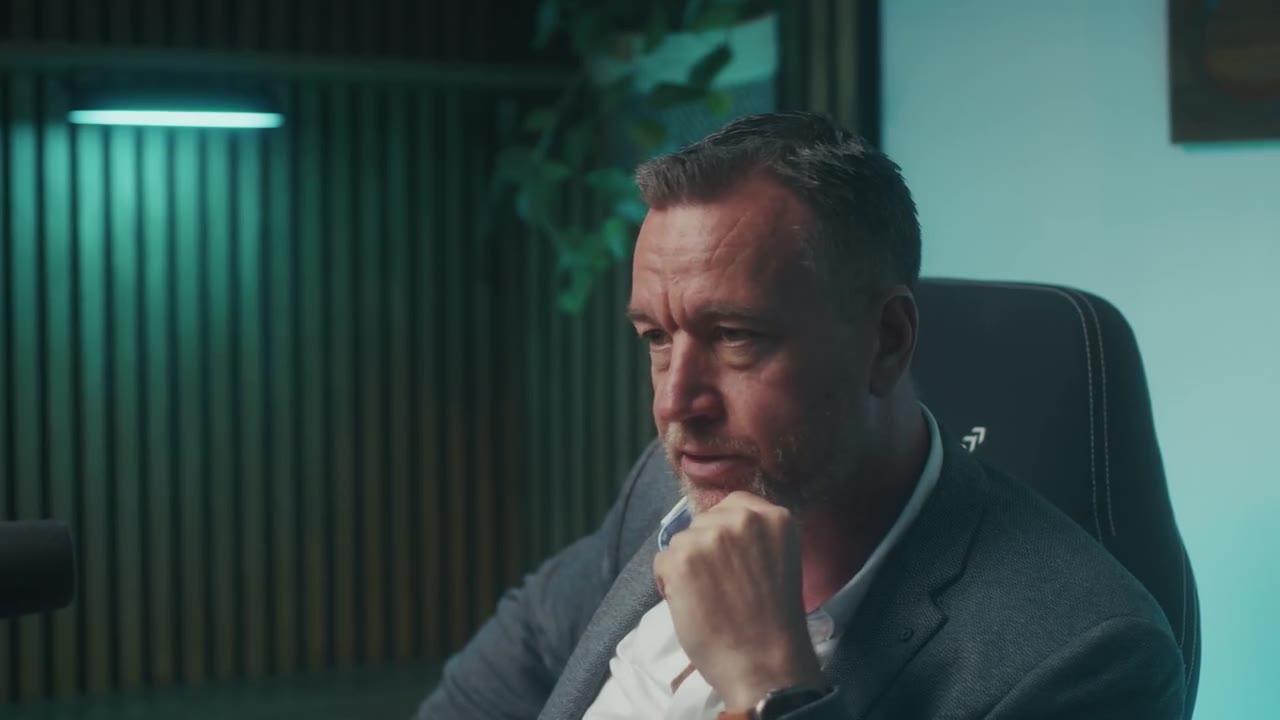
A founder story video that people actually watch opens on one specific moment instead of the company history. Build it around the problem you spotted, the decision you took and what that means for the viewer today. Film it as a relaxed interview, keep the main cut to two or three minutes, add captions, and cut shorter clips for social.
Most founder videos go wrong in the same way. They try to cram everything in: the year the company started, the office move, the awards, the values painted on the wall. Within seconds the viewer has drifted, because nothing has actually happened yet.
The good ones play more like a short documentary. A person with a real reason to care tells you about a problem, and before long you want to know how it ended. Here’s how to make a founder story video like that.
Settle the job first, before you plan a single shot. There are three usual candidates.
The first is trust. The video lives on your home or about page and answers the visitor’s quiet question: who are these people, and why should I believe them? The second is introducing yourself on social, where short cuts let new followers see who’s behind the business. The third is backing up a pitch or launch, so investors, partners or journalists hear the story in your own voice.
Choose the main one. That choice sets the length and the tone, and it tells you where the budget should go.
Every good story has a shape. There’s a situation and a problem, then a turning point, then a change. Yours works the same way, and the hard part is finding the exact moment it began.
“I founded the company in 2015” is a fact. “I was standing in a client’s kitchen when I realised nobody had told them the truth about what they’d paid for” is a story. Lead with the moment. Add background only where it earns its keep.
Yes, the story is about why you started. But the reason anyone keeps watching is what it means for them. Every founder story should land on one simple idea: here’s what we do differently, and here’s why you should care.
Nobody quite believes polished certainty. Admit the moment it nearly fell apart, or the thing you got wrong, and suddenly everything else you say sounds more believable.
No length is perfect. Each use does have a sensible range, though.
| Version | Typical length | Where it lives |
|---|---|---|
| Main film | 2–3 minutes | Website home or about page, YouTube |
| Short cut | 30–60 seconds | Instagram and Facebook feeds, LinkedIn |
| Clips | 10–30 seconds | Reels, Stories, ads |
| Long form (optional) | 8–20 minutes, or a series | YouTube, a documentary-style series |
Treat these as rough guides. A long film holds people when every minute pulls its weight, and a short one can feel like an age when it doesn’t. The honest test is simple: sit someone who doesn’t know your business in front of it and watch for the moment their eyes wander.
Think about long form if your audience already watches video for long stretches. Ofcom found UK online adults spent an average of 51 minutes a day on YouTube in 2025, and that’s before counting anything watched on a TV set (Ofcom). Release a documentary-style series in episodes and you get far more room to tell the story properly.
Most of the quality is decided at the planning stage. Get the plan tidy and the filming day is shorter and calmer.
Hardly any founder likes being filmed. That’s partly why the interview format exists.
Speak to a person instead of the lens. With an interviewer sitting just off camera you’ve got someone to talk to, and your eyeline looks right on screen. Answer in full sentences that repeat the question (“The reason I started the business was…”), so each answer makes sense once the interviewer’s voice is cut out.
Don’t learn lines. Know your stories and let the words come. As for clothes, wear what you’d put on to meet a good client, and steer clear of fine stripes and small checks, which can shimmer on camera.
People will forgive footage that’s a touch soft. Audio they can’t hear properly, they won’t. Use a decent microphone in a quiet room, and record a minute of room silence for the editor to use.
Lots of people scroll with the sound off, so a video that depends on audio has lost them in the first second. When Facebook brought in automatic captions for video ads in 2016, it said its internal tests showed captioned video ads increased view time by an average of 12% (Social Media Today). That figure is old now. The principle still holds: someone watching on mute should follow the first few seconds without trouble.
Open on your strongest line or image. Skip the logo sting. Cut anything that says the same thing twice, and if you use music to set the mood, keep it sitting under your voice where it belongs.
A modern phone, a clip-on microphone, good window light and a patient friend asking questions will get you a decent founder video. On a tight budget that’s a perfectly sensible starting point, and it beats having no video at all by a mile.
A professional brand videography crew earns its fee in some specific ways. It can coax a natural story out of a nervous interviewee and get lighting and sound that still look good on a big screen. It can shoot B-roll that makes the edit feel cinematic, then turn one shoot into a full set of cuts for different channels. If the film is going to sit on your home page for years, the spend is easier to justify. For the wider picture on costs, see how much personal branding costs in the UK.
Post it once and forget about it, and you’ve wasted it. Decide where each version will go before filming starts.
Still working out where video sits next to your website and photos, or how it fits with your social channels? The guide on what order to build your personal brand in should help.
Through our brand videography service we film documentary-style series, brand films, interviews and social video. That includes a documentary-style series with our founder, the author Jack Cartwright. We begin by listening to your story and agree the brief, scope and fee before we film. Then we cut the footage for your website and your channels.
Open questions that invite stories work best. Ask what you were doing before, the moment you decided to start, what nearly went wrong, what you do differently now and what a new customer should know. Follow-ups like “what did that feel like?” often get the best material of the day.
Usually not, because scripts tend to sound recited. A short outline of the key moments plus a list of interview questions gives you structure and keeps your delivery natural. If there are voiceover sections recorded separately, those can be scripted.
That depends on the scope. Expect a planning conversation, a filming day or half day, and then editing with rounds of review. Agree the timeline and the number of revisions at the outset so you know when the finished cuts will land.
Often, yes. A few short contributions from colleagues or customers make it more believable and stop it turning into a monologue. They also show the business isn’t only about you, which counts if you plan to grow the team or step back later on.
Yes, and you should plan for it from day one. One good interview can give you a main film, a short cut, a handful of social clips and quotes for your website. Tell your videographer at the start so they shoot enough B-roll, in the right formats.
A no-nonsense guide to getting your LinkedIn profile right, posting with a simple rhythm you can keep, and deciding honestly whether to get help.
A balanced look at why CEOs build a public profile, what can go wrong, and how to do it in a way that serves the company.
How to put your face and voice behind your business in a way that builds trust in the company, not just in you.
Four quick questions, and we’ll show you where we’d start. Your answers come straight to us with your message, so you won’t have to explain it twice.
A 30-minute introduction call on Microsoft Teams, Monday to Friday, 9am to 5pm. Your answers come with the booking, so we’ll be ready for you.
Prefer to talk it through? Make an appointment for a 30-minute call on Microsoft Teams, Monday to Friday, 9am to 5pm.
A closer look at the work behind each part of your plan.
We use analytics cookies to understand how visitors use our site. They are only set if you accept. Read our privacy policy.