FOR BUSINESS OWNERS
Should you hire a social media manager? What they do and what it costs in the UK
What a social media manager actually does, what the different routes cost in the UK, and the signs that you are ready to hand it over.

Indicative UK prices for a personal brand website, what drives the cost up or down, and the running costs people forget.
A personal brand website in the UK can cost next to nothing on a DIY template or £10,000 and up from an agency. Published UK guides put freelancer-built sites at roughly £2,000 to £6,000 and agency-built small business sites at £5,000 to £10,000. Yearly costs for hosting and the domain come on top, plus maintenance. These ranges are indicative.
Website pricing is confusing for a simple reason. “A website” can mean a one-page template you knock together on a Sunday afternoon, or a fully designed, professionally written site that wins work for your business while you sleep. The figures look wildly different because the products are.
This guide sets out what UK suppliers and price guides publish and what pushes the cost up or down. It also covers the running costs people tend to forget. Every figure is indicative and comes from a published source. The only number that counts is your own quote.
We quote every personal brand website for the person it’s for. The fee depends on how many pages you need and whether we write the copy. It also depends on whether new photography is part of it, on features such as booking or a newsletter, and on how much care you want once the site is live.
Tell us where you are now. We’ll reply personally with an honest view of what you need and what it would cost.
See where we’d start with you →
A personal brand website is built around you instead of a faceless company. It tells your story and shows your expertise and your work, then explains how to hire you or buy from you. Authors and consultants use one as home base. So do speakers and creatives, along with plenty of business owners. It’s where their social media and ads point back to, and their press coverage too.
It usually has fewer pages than a corporate site. What it needs far more of is good writing and photography, plus careful design, because the whole idea is that visitors get a feel for the person. A good personal brand website is like meeting someone before you’ve even got in touch.
This is what published UK sources say, sorted by how the site gets made.
| Route | Indicative UK price |
|---|---|
| DIY or template website | £0 to £1,000 |
| Self-hosted WordPress you set up yourself | About £60 to £150 a year for hosting and domain |
| Done-for-you author website service | £199 to build plus £15 a month |
| Basic informational or portfolio site | £500 to £1,500 |
| Four-page author website, designed for you | From £1,500 |
| Freelancer-built website | £2,000 to £6,000 |
| Agency-built small business website | £5,000 to £10,000 |
The ranges come from UK price guides and from prices published by UK web designers and author-website services in October 2026. Treat them as indicative only.
The guides don’t all agree. One puts small business sites at £1,500 to £5,000, while another puts an agency-built small business site at £5,000 to £10,000. Neither is wrong. They’re describing different levels of design and writing, with different amounts of support. So use the ranges to sense-check a quote you’ve been given, and don’t use them to set one.
Want the cost of a whole personal brand, with photography and video included, plus social media? Read our guide to how much personal branding costs in the UK.
Two sites with the same number of pages can be priced thousands of pounds apart. These are the usual reasons.
Lots of cheaper quotes assume you’ll hand over all the text. A clear “About” page is harder to write than it looks, and so are service descriptions and calls to action. Good copywriting is often what separates a site that looks nice from one that brings in enquiries. Check whether copy is in the quote.
A personal brand site without good pictures of you is very hard to pull off. If you need a brand photoshoot, budget for it on its own or ask whether it’s part of the project. Stock photos rarely work on a site that’s meant to be about a real person.
Adapting a good template with your colours and photographs is cheaper and quicker. Custom design costs more, but it can be shaped around your story and around what you want visitors to do. Both are fine. The choice comes down to how much the site has to set you apart.
Every extra feature adds time, whether it’s newsletter sign-up, booking, online payments, a shop, event listings or a members’ area. Ecommerce in particular puts you in a different price bracket. UK price guides suggest ecommerce sites usually start at around £10,000.
Any professional build should include basic SEO. That means sensible page titles and descriptions with proper headings. The site should also load fast and have a clean structure. Ongoing SEO, such as writing articles or building links, is usually charged separately.
The most expensive website you’ll ever have is the one you rebuild a year later because it never said the right thing. Some suppliers begin with a discovery or positioning stage. Others jump straight to design. If you don’t yet know what you want to be known for, that thinking still has to happen somewhere, and it’s cheaper before the build than after.
The build is only part of what you’ll pay. Plan for these running costs, shown here with the figures the sources give.
Happy updating WordPress yourself and keeping your own backups? Then your running costs can stay low. If you’d rather never think about it, a care plan is money well spent.
DIY makes sense if you’re just starting out on a tight budget and you’re happy to write your own copy. A tidy one-page site with a good photograph, one clear sentence about what you do and a contact form beats having nothing.
Paying someone makes more sense once the website has to win work by itself. That’s when people find you through search, when you’re charging premium fees, or when you’ve outgrown a template and it no longer looks like the level you work at. It’s also the answer if you just don’t have the hours.
Whichever way you go, think about the order. A site built before you’ve got your story and photographs sorted often gets rebuilt later. Our guide to what order to build a personal brand in explains why the website usually follows the thinking.
A good supplier will answer every one of these happily, and in writing.
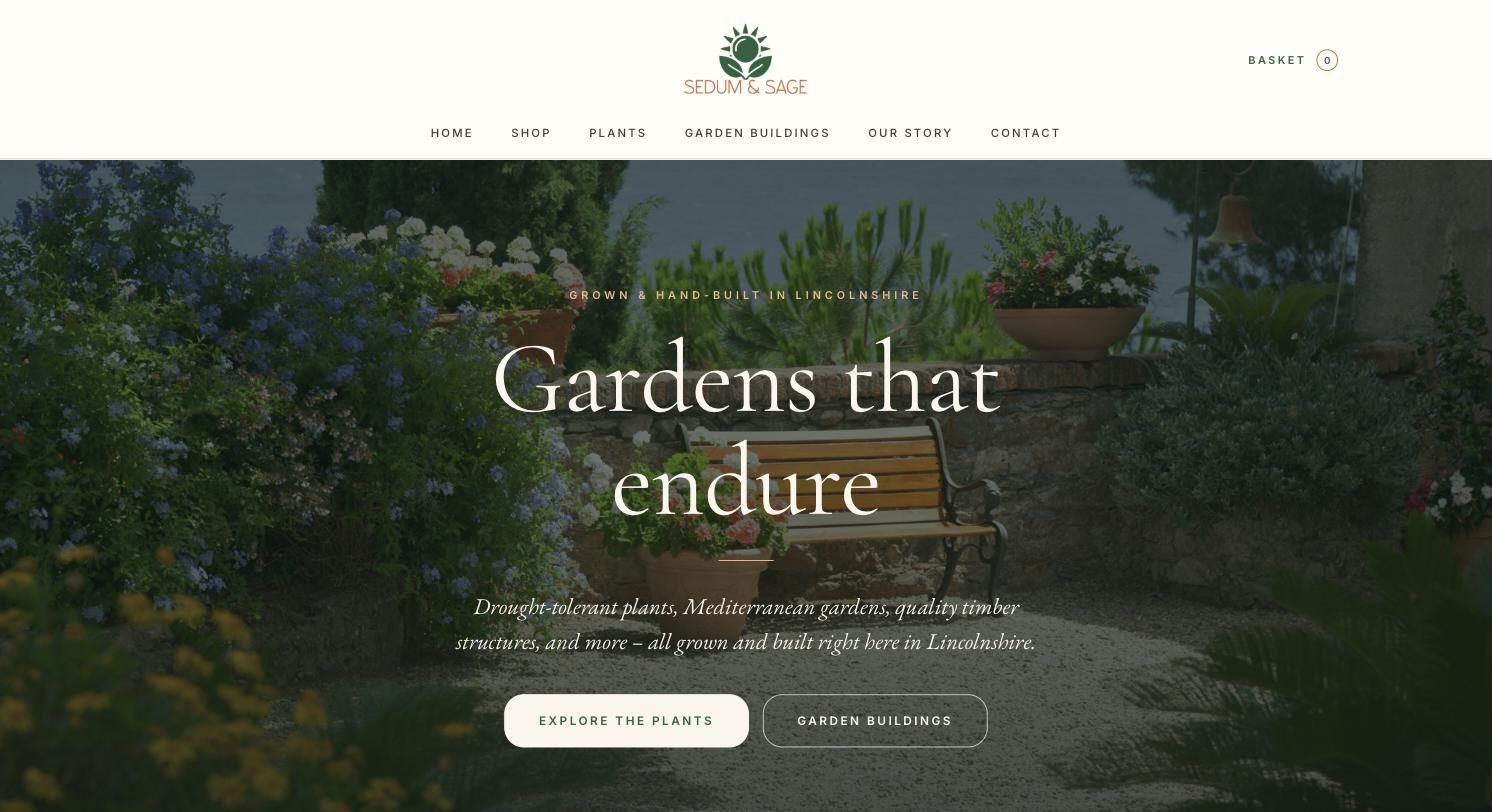
We design and build personal brand websites on WordPress with the copy and SEO foundations included. Past sites include those for authors Jack Cartwright and J M Dalgliesh and for Sedum & Sage. There are no fixed packages. We listen first, then agree a clear brief, scope and fee with you before any creative work starts. If you need photographs as well, we can plan our brand photography alongside the site. Start a conversation to talk it through.
Yes, if you build it yourself on a template or go with a low-cost service. Some done-for-you author website services start at around £200 plus a monthly fee, for example. The catch is that you usually supply your own words and images, and you get fewer design options.
They vary because they cover different things. One quote might be design and build only. Another might take in strategy, copywriting and photography, plus SEO set-up and ongoing support. Compare what’s included as well as the total.
For most people, yes. It’s widely used and flexible, and lots of developers support it, so you aren’t tied to one supplier. Simpler builders can be fine for a basic site, but they can be harder to grow or move later on.
That depends on the scope and on how fast the content is ready. Some specialist designers advertise a simple four-page site in about three weeks once they have the content. Projects that also need strategy and copywriting, or a photoshoot, take longer, as you’d expect.
Not necessarily. If you’re confident keeping WordPress and its plugins updated and running backups yourself, you can manage without. If you’d rather not, a care plan protects the site from security problems and saves you time.
If most of your audience is in the UK, a .co.uk is the natural choice. If you work internationally, a .com may suit you better. Plenty of people register both and point one at the other. Use your own name if it’s free.
What a social media manager actually does, what the different routes cost in the UK, and the signs that you are ready to hand it over.
A workable content mix for small business social media, how often to post on Instagram and Facebook, and how to keep going when you are busy.
A logo is one piece of a brand identity. Here is what an owner-led business actually needs, what each option costs in the UK, and what…
Four quick questions, and we’ll show you where we’d start. Your answers come straight to us with your message, so you won’t have to explain it twice.
A 30-minute introduction call on Microsoft Teams, Monday to Friday, 9am to 5pm. Your answers come with the booking, so we’ll be ready for you.
Prefer to talk it through? Make an appointment for a 30-minute call on Microsoft Teams, Monday to Friday, 9am to 5pm.
A closer look at the work behind each part of your plan.
We use analytics cookies to understand how visitors use our site. They are only set if you accept. Read our privacy policy.