FOR LIFE COACHES
What should a life coach say in a welcome video?
A simple structure for a homepage welcome film that feels like the first minutes of a discovery call, with UK notes on captions, embeds and claims.

Prompts, framing, sound and simple ways through camera nerves, so UK life coaches can film short videos that sound like a real conversation.
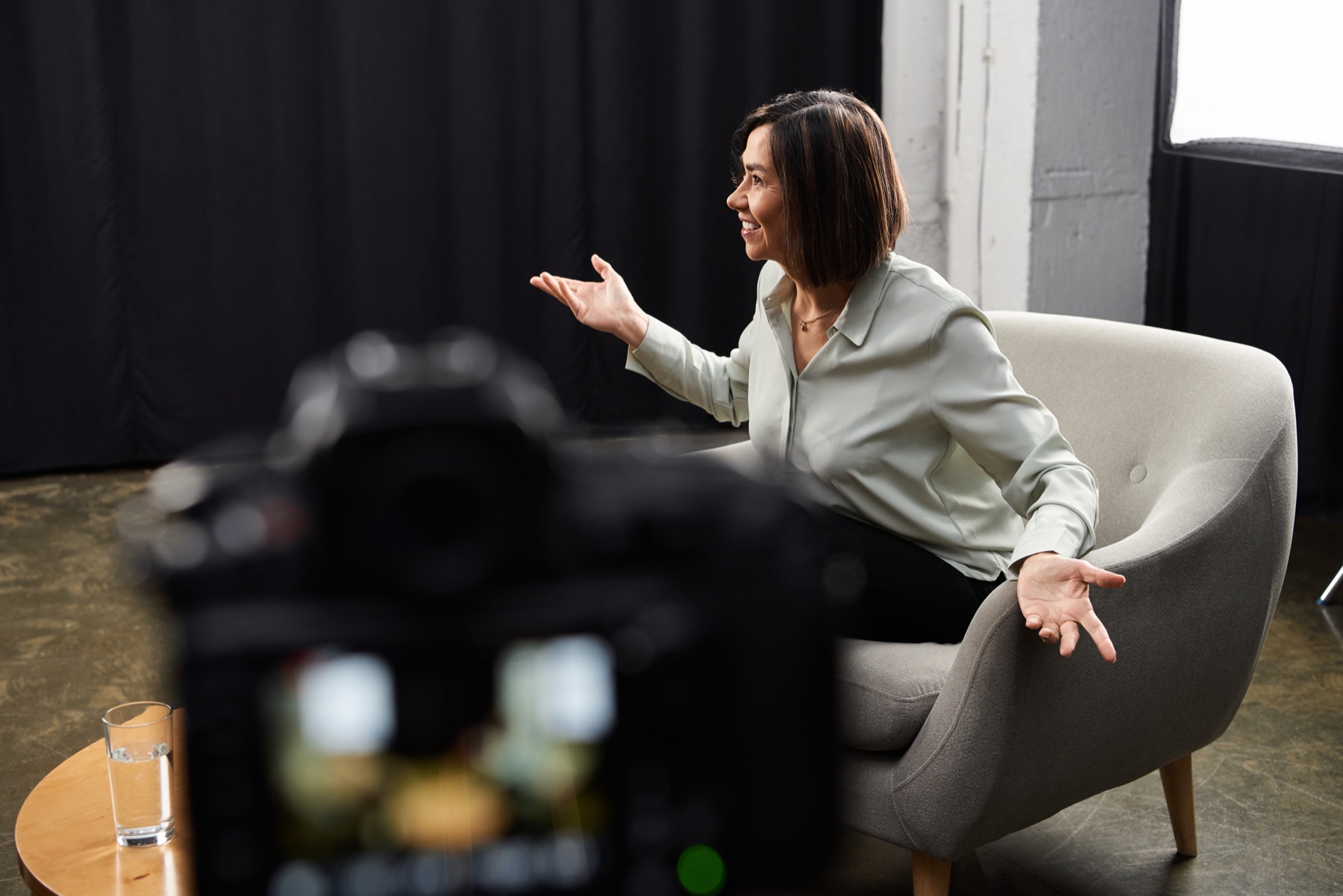
Talking to camera videos for coaches work best when they feel like one side of a real conversation: one idea per video, filmed at eye level in soft light, with a clip-on microphone and accurate captions. Draw your topics from questions people ask on discovery calls, speak from a few bullet points rather than a script, and film in short takes. Nerves ease quickly once you talk to one imagined person instead of an audience, and one relaxed morning can give you weeks of clips.
Picture someone on a train home, scrolling without really looking. Then your face appears, and you are answering the exact question they were turning over at 3am last week. They watch to the end. They tap through to your profile, watch two more, and that evening they book a discovery call. When you meet, they say it feels like they already know you.
That is what a good talking-to-camera video does. It lets people hear your voice, notice your pace and feel your manner before they ever speak to you. Here is how to plan, film and share them, even if the camera currently makes you freeze.
Because coaching is a relationship, and video is the nearest thing to meeting. Written posts tell people what you think. Video shows them how you listen, how you pause, whether you are gentle or brisk, playful or calm. Those are exactly the things a future client is trying to judge.
Video also filters. The people who warm to your style book calls already half sure; the people who don’t, move on. Your discovery calls start further along, and fewer of them end in a polite “I’ll think about it”.
Start with the questions you hear most. Keep a note on your phone of what people ask on discovery calls and in workshop breaks, because each one is a video. Other reliable prompts:
If you want one longer film for your website, our guide to a welcome video for your coaching website covers what to include.
A simple shape works for almost everything:
Most short videos land somewhere between thirty seconds and two minutes. YouTube allows Shorts up to 3 minutes long, but shorter is usually kinder to your viewer and easier to film.
People will forgive a slightly soft image. They will scroll past bad sound within seconds, and for a coach your voice is the whole point. A small clip-on microphone that plugs into your phone makes a bigger difference than any camera upgrade.
Film in a room with soft furnishings (curtains, rugs, a sofa), which absorb echo. Switch off noisy appliances, close the window and put your phone on do not disturb. Record ten seconds, listen back on headphones, then start properly.
Remember that you already do this well. You talk to strangers about difficult things every week on discovery calls. The camera is just one more person to put at ease.
Yes. People often watch in places where they can’t play sound, and captions make your videos accessible. The W3C notes that captions help people who are Deaf or hard of hearing, others who cannot hear the audio, and people who take in written information more easily than speech.
Automatic captions are a good start, but check them. YouTube says the quality of automatic captions may vary and advises creators to review and edit them. Names, coaching terms and accents are where errors creep in.
A few UK rules and ethical lines are worth keeping in mind:
Filming yourself on a phone is a perfectly good way to start, and many coaches never stop. Bringing in a videographer makes sense when you want a consistent look, better sound, help with prompts and an edited library of clips from a single session. Our videography for life coaches is built around those relaxed talking-to-camera days, and it connects with the rest of our marketing for life coaches. If you are also posting on LinkedIn, our LinkedIn video tips cover that platform.
We want you to finish a filming morning surprised by how natural you sound, with weeks of clips ready to share. Our team began working in-house for co-founder Jack Cartwright, turning one filming session into videos for every channel he used, and we still work that way. Our videography for life coaches brings prompts, gentle direction and clear sound, then edits for your website and socials. A clear brief, scope and fee are agreed before any creative work begins.
Long enough to make one point well, and no longer. For Reels, TikTok and Shorts that often means thirty seconds to a minute and a half. A website welcome film or a YouTube video can run longer, because people choosing to watch it are already interested. If a topic needs more time, split it into a short series.
Choose a rhythm you can keep for months, whether that is one video a week or three. Consistency builds familiarity far more than bursts of activity. Filming several videos in one session and scheduling them makes a steady pace much easier to maintain alongside a full coaching diary.
No. A recent smartphone, a small tripod, a clip-on microphone and a window will produce good results. Spend money on sound before anything else. A professional camera and lighting add polish, but they matter less than a clear voice, steady framing and a relaxed delivery.
Some coaches find a teleprompter app helpful for longer pieces such as a welcome video. For short clips, it often makes delivery stiff and your eyes visibly track the words. Try speaking from three bullet points first, and keep the teleprompter for anything where precise wording genuinely matters.
Largely, yes. A vertical clip can usually go to Instagram Reels, TikTok and YouTube Shorts with small changes to the caption and opening text. Your website and YouTube channel suit horizontal versions. Framing a little wider when you film gives you room to crop for each shape.
A simple structure for a homepage welcome film that feels like the first minutes of a discovery call, with UK notes on captions, embeds and claims.
Where stock images are fine on a UK coaching website, where they quietly cost you trust, and the licence and advertising rules worth knowing.
When a UK life coach needs a logo, name versus symbol, what it has to work on from profile pictures to workbooks, and what to know…
Four quick questions, and we’ll show you where we’d start. Your answers come straight to us with your message, so you won’t have to explain it twice.
A 30-minute introduction call on Microsoft Teams, Monday to Friday, 9am to 5pm. Your answers come with the booking, so we’ll be ready for you.
Prefer to talk it through? Make an appointment for a 30-minute call on Microsoft Teams, Monday to Friday, 9am to 5pm.
A closer look at the work behind each part of your plan.
We use analytics cookies to understand how visitors use our site. They are only set if you accept. Read our privacy policy.