FOR MUSICIANS & BANDS
YouTube for Musicians: Channel Set-Up, Shorts and Live Sessions
How independent UK artists can set up a YouTube channel, apply for an Official Artist Channel, use Shorts, go live, organise playlists and build a community.

How to brief a gig photographer, get venue permission, deal with stage lighting and use live photos properly, including crowd shots and copyright.
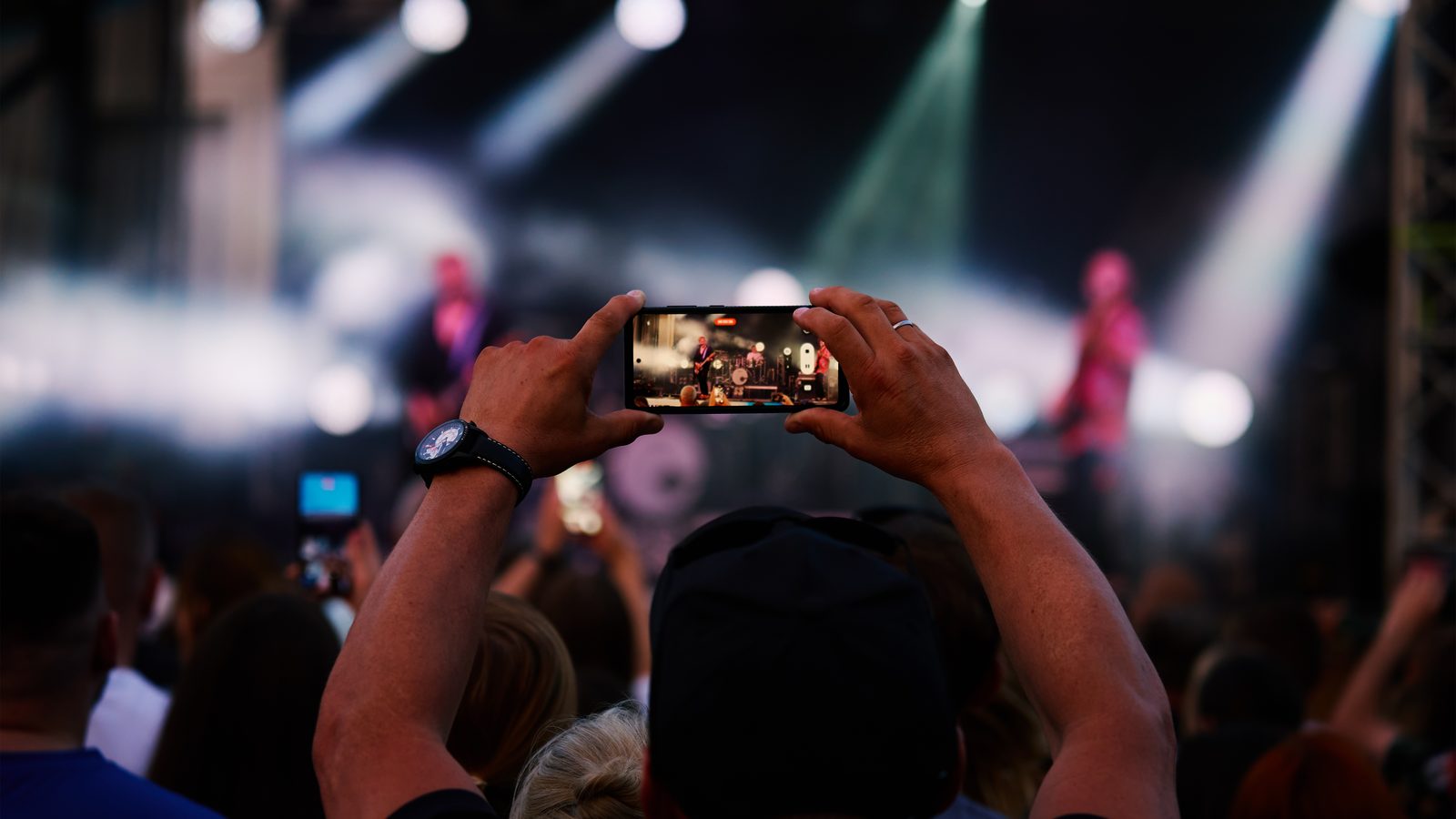
To get great live music photography of your band, brief the photographer with your set list, the big moments and the pictures you need. Ask the venue for permission and check any photo-pass rules. Talk through the stage lighting, agree in writing who owns the images and how you can use them, and take care with shots of identifiable fans.
Good live music photography is among the most useful material a musician can own. It shows promoters and bookers what you’re like on stage (fans too), and every show hands you a fresh batch of content for social media. Getting it right is hard, though. Low light and fast movement work against the photographer, and so does a packed room with nowhere to stand.
Most of the gap between a great gig gallery and a disappointing one is decided before the first song. This guide covers how to prepare and what to ask the venue. It also looks at how stage lighting changes the result, and what to check before the pictures go online.
A short written brief makes a big difference. The photographer can’t guess which moments mean the most to you, and they’re usually seeing your set for the first time on the night.
Start by sending the set list and running order, with the big moments marked: the opener, a singalong, a solo, the finale. Then say what the pictures are for. A bio photo for your website needs a different frame from a poster, and a festival application needs something else again, as does a run of social clips.
List the shots you can’t do without. That usually means each member on their own and the full band on stage, plus the crowd reacting. Close-ups of hands on instruments are worth asking for, and so is the venue sign.
Warn them about the lighting. If you run your own lights or go for a particular look, tell them. Mention any haze, strobes or LEDs as well. Finally, agree when they’re allowed to shoot. Some bands ask for the first three songs only, which gives the photographer a tight window. Others are happy for them to shoot all night.
A quick portrait session before the doors open is worth setting up too, so you come away with some posed frames as well. For stronger promo pictures to sit alongside the gig shots, our live and promo photography for musicians explains what we can do.
Yes, so ask. A gig happens on private premises, and plenty of venues have their own rules on cameras and flash, and on who can stand where. Some bigger venues and festivals run a formal photo-pass system, which often limits how long the photographer can shoot, where they can stand and what they’re allowed to do with the pictures afterwards.
At smaller grassroots gigs, a quick message to the promoter or venue manager usually does the job. Ask about:
If you’re on a support slot or a festival bill, check with the promoter or the headline act’s team, because some restrict photography during their own set. Hiring a photographer for a private function like a wedding or a corporate booking? Ask the client too.
Lighting has more effect on how your photos turn out than anything else. Most gigs are dark and the light never stops changing, so photographers rely on fast lenses and high sensitivity settings, plus a good sense of timing.
Light the singer’s face. A lot of small venues leave singers as a silhouette, and a front or side light on the face is behind most of the best pictures. Go easy on pure red. Deep red can strip the detail out of skin tones, and heavily saturated colour washes do the same. Mix in white or warmer light where you can.
If possible, let the photographer walk the room during soundcheck and test the light. And don’t lean on flash. It flattens everything and puts performers off. The audience hates it too.
Smoke and strobes give you dramatic pictures, as does heavy backlighting, but you lose detail. If you need clean shots for promoters as well as moody gig photos, ask the photographer to get both, or book a separate daylight session.
Photographs are covered by copyright from the moment they’re taken. GOV.UK’s guidance says copyright protects original artistic work including photography and that it applies automatically. Its guidance on ownership of copyright works explains that a freelancer working under a contract for services will usually keep the copyright in what they make, with ownership passing to whoever commissioned the work only if that’s agreed in writing.
So paying someone to shoot your gig doesn’t automatically mean you can use the pictures however you please. Agree these points in writing:
It works the other way round too. If a fan or a local photographer gets some great shots, ask before you reuse them and give them a credit. A friendly request nearly always works, and it saves you an awkward takedown request down the line.
Be careful, and keep the band at the centre. The usual advice for promo use is to pick pictures where the audience sits in the background instead of being the subject. Take more care with images where individuals are clearly recognisable, especially children.
The Information Commissioner’s Office explains that data protection law doesn’t apply to purely personal or household activity. It adds that posting to a public account viewable by an indefinite number of people is likely to go beyond personal use. That page was written about school photos, so read it as a general principle and not as a ruling on gigs. A band using pictures to promote itself isn’t in the same position as a fan posting for friends, and if you plan to put identifiable crowd shots in adverts or on your website, it’s sensible to get specialist advice.
In practice the cautious route is straightforward:
The same goes for your own bandmates. Spotify’s artist image guidelines say you can’t post an image of an individual without their consent, so check every member is happy with the pictures before you publish them.
Our team includes working photographers who can cover your gigs, rehearsals and launch nights. They’ll go through the brief with you beforehand and deliver an edited gallery you can use across all your marketing. Find out more about our live music photography for bands and artists, and have a look at our wider marketing for musicians. We agree a clear brief, scope and fee with you before any work begins.
Give as much as you can, ideally a few weeks. That leaves time to agree the brief and get the venue’s permission, and to check the lighting. For a one-off special show, book the photographer the moment the date is confirmed.
That depends on the venue, and most professionals avoid it anyway. Flash flattens the lighting, can put performers off and annoys the audience. Ask about the venue’s policy when you request permission, and brief the photographer to work with the stage lighting that’s there.
Usually, yes. Lots of bands encourage it. Venues and promoters sometimes set their own rules, though. If you don’t want professional-quality recording or filming, say so on the tickets or door signs. Ask fans to tag you. Always ask before you reuse their pictures, and credit them when you do.
It should say where and how you can use the images, and for how long. It should also cover whether credit is needed, whether you can edit them and whether the photographer can reuse them. Get it in writing before the gig, because copyright usually stays with the photographer unless you agree otherwise.
Not necessarily, but a few crowd shots get across the atmosphere and show people want to see you. Ask your photographer to shoot from behind the audience or from the side so nobody is clearly identifiable. Keep the band as the focus and treat any recognisable faces with care.
How independent UK artists can set up a YouTube channel, apply for an Official Artist Channel, use Shorts, go live, organise playlists and build a community.
How function and wedding bands can get found and booked: website and video, Google Business Profile, directories, honest reviews and fast enquiry handling.
How independent UK artists can use TikTok: choosing sounds, writing hooks, posting consistently, getting your own track onto the app and learning from analytics.
Four quick questions, and we’ll show you where we’d start. Your answers come straight to us with your message, so you won’t have to explain it twice.
A 30-minute introduction call on Microsoft Teams, Monday to Friday, 9am to 5pm. Your answers come with the booking, so we’ll be ready for you.
Prefer to talk it through? Make an appointment for a 30-minute call on Microsoft Teams, Monday to Friday, 9am to 5pm.
A closer look at the work behind each part of your plan.
We use analytics cookies to understand how visitors use our site. They are only set if you accept. Read our privacy policy.