FOR AUTHORS
What Should Authors Post on Social Media Between Releases?
What should authors post between releases? A balanced mix of story, process and reader posts, series reminders, countdowns and a weekly plan.

Your author brand is the promise readers come back for. Here is how to define it, show it consistently and build it into something that lasts.
An author brand is the promise readers connect with your name: the kind of story and mood they can count on every time. To build one, pin that promise down in plain words. Show it the same way wherever readers meet you, from covers to social posts, and keep in touch through a mailing list you own.
Most of your readers will never meet you. All they have is a name on a cover, a photo, a handful of posts and the feeling your last book left them with. Put those together and you have your author brand. You’ve got one already, planned or not.
Building it on purpose has less to do with self-promotion than you might fear. It’s mostly about being clear. Once readers know exactly what you write, buying the next book is an easy decision, recommending you to a friend is easy too, and they’ll happily wait for the one after.
A logo and a colour palette can help, but neither is the brand. The brand is your answer to a question every reader asks without saying it out loud: “If I pick up a book by this person, what am I going to get?”
Take a crime writer. Their answer might be one detective in one town, written with a certain shade of darkness. A romance author’s answer could be a sub-genre with its own tone, plus a happy ending you can rely on. Non-fiction authors usually answer with the problem they solve for people and the way they explain it.
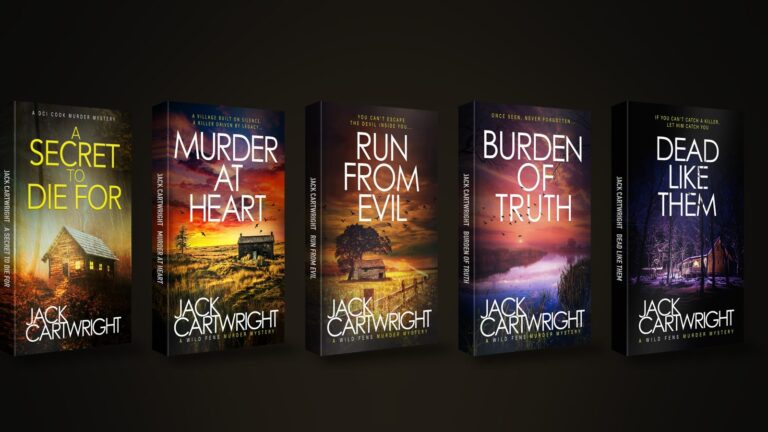
The strongest author brands I’ve seen get three things right. They have a promise a stranger could understand in one sentence, covering the genre and mood as well as what it’s like to read. Everything looks and sounds like it belongs together. Covers match photos. The website matches the posts. And the author can reach readers directly, without depending on one platform’s algorithm.
Yes, but it can be a light one. With a single book out, brand and book are nearly the same thing. So ask yourself where you’re going next. If a series is coming, or more titles in the same genre, set things up now so that the next cover, photo and post all feel like part of one body of work. You can rebrand later. It just eats time, and it can throw the readers who already know you.
Writing in genres that sit far apart gives you a real decision to make. One option is to keep a single name and let your personal voice tie it all together. The other is a separate pen name for each readership, so every audience gets a clear promise. Both are fine. How far apart the audiences are should decide it.
Begin with your readers. You come second. A short written exercise will do most of the work.
Who enjoys your books already? If you’re just starting, who enjoys the books most like yours? Think about what else they read and watch, and what they talk about. Reviews of comparable titles cost nothing and show you the words readers use themselves.
Something like: “Atmospheric police procedurals set in a small coastal town, with a detective who carries the past with him.” Make it specific enough that the wrong reader can rule themselves out. That’s a good sign. It means the promise is doing its job.
Brooding. Warm. Witty, unflinching, cosy or down to earth. Whichever words you choose become the test for every design and writing call you make after this. Hold up a cover, a photo or a caption and ask whether it feels like those words.
Plenty of readers want to know who’s behind the books, but where the line sits is your call. Research trips are fair game. So is your writing routine, along with the places that spark ideas and the books you love. Family life and politics? Share them only if you want to.
If you’d struggle to do this on your own, a brand design process exists for exactly this job. Someone listens to your story first, then shapes it into positioning and messaging, with a visual identity you can use everywhere.
Consistency is what turns a pile of separate books into a body of work readers recognise. These are the places where it counts most.
| Touchpoint | What consistency looks like |
|---|---|
| Covers | Shared typography, name placement and design language across a series, so readers spot the next instalment instantly. |
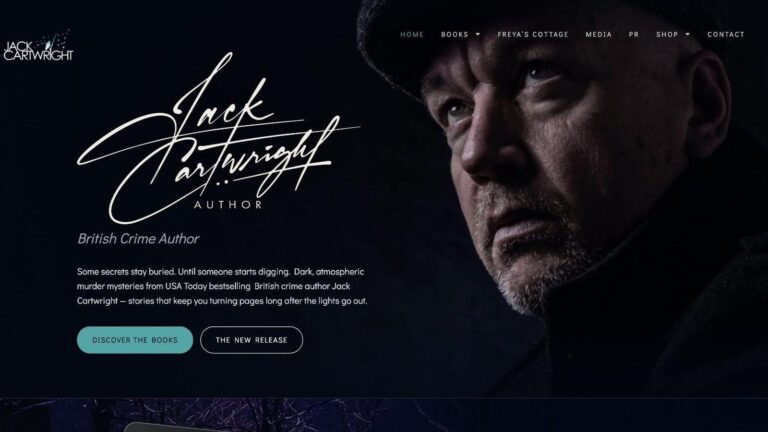
| Author photos | One main portrait used everywhere, in a style that suits your genre, refreshed every few years. |
| Website | The same fonts, colours and tone as your covers, with your books and mailing list front and centre. |
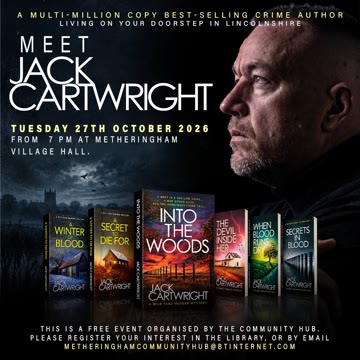
| Social media | A recognisable look for graphics and a steady voice in captions. |
| Retailer pages | An up-to-date author bio and photo on your Amazon author page and other stores. |
According to KDP’s help pages, Author Central works on Amazon.co.uk as well as Amazon.com and several other marketplaces. Set your profile up. A curious reader will often look there before anywhere else.
Anyone who has worked behind a bestselling author knows how much of this is dull repetition. Our founder, Jack Cartwright, is a USA Today bestselling author with more than a million books sold, 60+ published titles and three bestselling series. Limelight started life as his own team. We ran his social media and videos. We handled his ads and book covers, and his website too, so he could stay at his desk and write. In his words: “I spent years developing a brand. It was only when I stepped out from behind it that the results truly came.”
Social platforms keep changing their rules. Retailer pages are built around the retailer, not around you. Your own website is the one spot where you decide the message and the design, and where the path to your mailing list is yours. It can be small. What it can’t be is vague about what you write, where people can buy it and how they’ll hear about the next one. Our guide to what an author website should include walks through it page by page. Still unsure it’s worth the effort? Read do you need an author website if you’re self-published?
With a mailing list, you can announce a launch and know it reaches people, whatever an algorithm decides that week. In the UK, PECR covers marketing emails. The ICO’s guidance on electronic mail marketing says you’ll generally need people’s specific consent, an easy way for them to unsubscribe and a valid contact address. So use a proper sign-up form. A list of addresses you’ve gathered informally won’t do.
Choose one or two platforms your readers already use, and do them well. Regular posts that reflect your promise, whether that’s the setting, the characters, the writing life or what readers are saying, will build recognition far faster than a flurry in launch week followed by silence.
Keep it up and the numbers do move. Our social media management team runs Jack Cartwright’s Facebook page, where followers went from 4,664 to 5,789 between July and October 2026. A single reel posted on 27 July reached 53,827 impressions. On 3 May the page picked up 172,040 views in one day (figures from Metricool).
Lots of authors do, particularly in the early years. You can get a long way with a clear promise and a simple website. Add a mailing list and one social platform you post on regularly. None of that needs an agency. Outside help starts to pay for itself once the work begins eating into your writing time, or when you’re launching or relaunching a series and need professional photography and design (video too) that match the quality of the books themselves.
We began as a bestselling author’s in-house team, so we know what kind of brand an author needs and how much time it takes to keep it running. We can help you define your author brand, build a website you own and run your social media. Before any creative work starts, we agree a clear brief with you, along with the scope and fee. If that sounds useful, start a conversation, or find out more about our author branding and marketing services.
Your author brand is what readers connect with your name, meaning the promise and how it looks and feels. Your platform is the reach you have to get that promise in front of people: your website and mailing list, your social following, your press contacts. A strong brand makes the platform easier to grow, because people know what they’re signing up for.
That depends on how different the two readerships are. If someone who loves your current books would be confused or let down by the new one, a separate name keeps each promise clean. Where the audiences overlap, one name with clear series branding is usually easier to manage. There’s no single right answer here.
You can define it in a few focused sessions, but recognition takes much longer, usually several books plus years of turning up online. Showing up consistently counts for more than any single launch.
Not necessarily. For most authors, the way your name is set on the covers does a logo’s job. Consistent typography and colours will do far more for you, especially when your photography matches across covers and social media.
The best platform is the one your readers use and you can keep up with. Facebook and Instagram suit lots of genres and age groups. Video-led platforms suit authors who are happy on camera. Doing one platform well beats doing four badly.
What should authors post between releases? A balanced mix of story, process and reader posts, series reminders, countdowns and a weekly plan.
Learn how to give every book in a series a consistent look, with colour per book, clear numbering, box set covers and refreshes that help read-through.
Why indie authors sell ebooks, paperbacks and audiobooks from their own site, how delivery works, and what to check on VAT and KDP Select first.
Four quick questions, and we’ll show you where we’d start. Your answers come straight to us with your message, so you won’t have to explain it twice.
A 30-minute introduction call on Microsoft Teams, Monday to Friday, 9am to 5pm. Your answers come with the booking, so we’ll be ready for you.
Prefer to talk it through? Make an appointment for a 30-minute call on Microsoft Teams, Monday to Friday, 9am to 5pm.
A closer look at the work behind each part of your plan.
We use analytics cookies to understand how visitors use our site. They are only set if you accept. Read our privacy policy.