FOR AUTHORS
What Should Authors Post on Social Media Between Releases?
What should authors post between releases? A balanced mix of story, process and reader posts, series reminders, countdowns and a weekly plan.

Instagram for authors: how to set up your profile, match your grid to your covers, use Reels, Stories and ARC readers, and run a cover reveal.
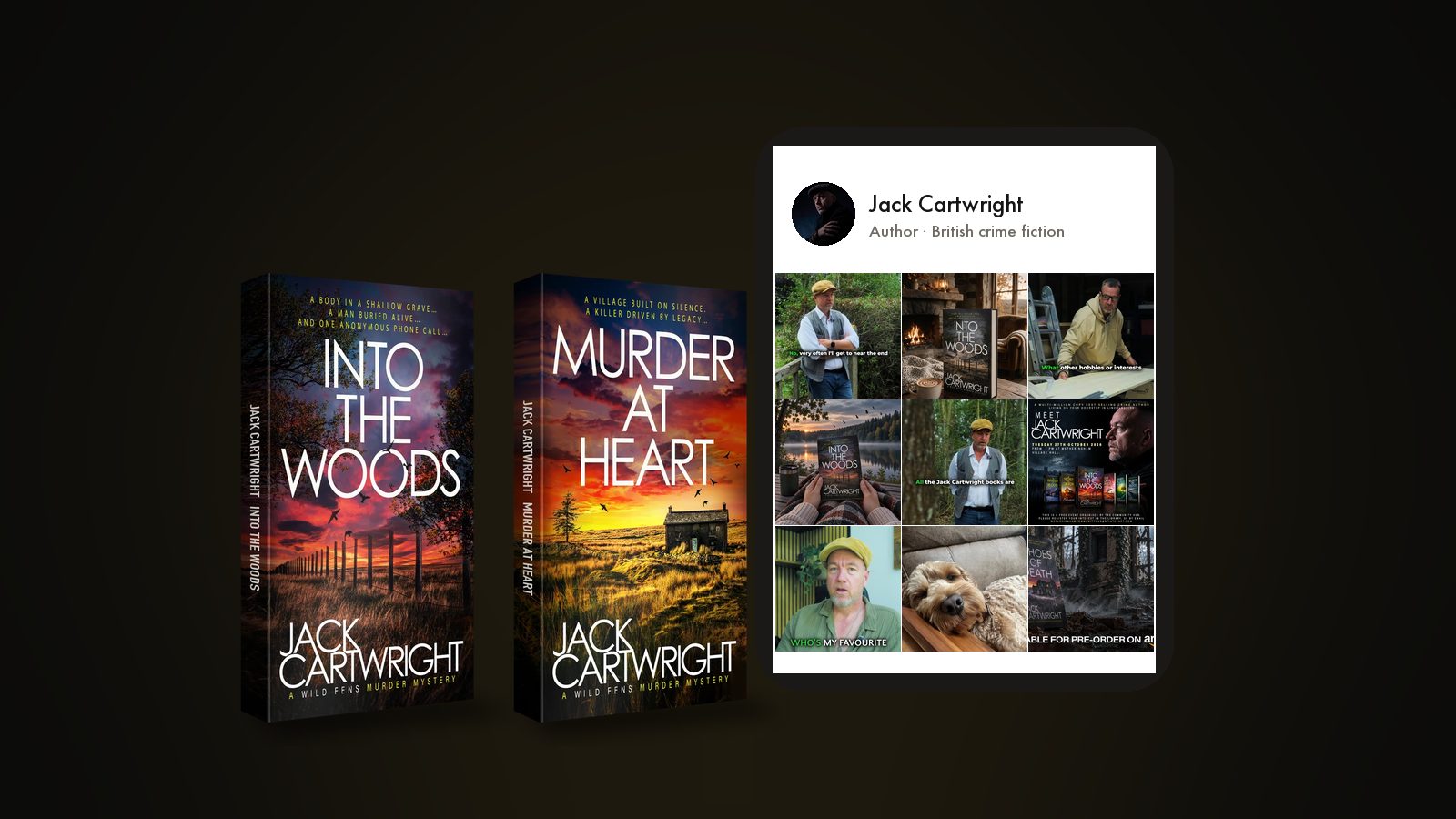
Instagram for authors is about looking like the books you write. Set up a profile naming your genre and linking to your book page, and keep your grid matching your covers. Use Reels to reach new readers, posts to hold your look and Stories for daily updates. Work openly with Bookstagrammers and ARC readers, and plan cover reveals ahead.
A lot of readers go to Instagram just to look at books. Bookstagram, the book-loving corner of the platform, is full of readers who photograph their shelves and stage their current read, then share what they thought of it. That visual habit makes Instagram for authors a good fit, especially in genres where the cover does half the selling. If you’d sooner hand it over, have a look at our social media for authors service.
The trap is treating it like a diary. A reader who lands on your profile decides in a few seconds whether you write what they like. This guide shows you how to make that decision easy, and how to keep the account going between releases without it eating your writing time.
Treat your profile as a shop window. Without scrolling, a stranger should be able to tell who you are and what you write. They should also see where to find the books.
The grid is the block of images on your profile. A reader who clicks through from a post will flick through it fast, so it should feel like it belongs to the same world as your covers.
Take two or three colours and a typeface from your covers and reuse them in quote graphics and text overlays. A psychological thriller with a cold, dark palette shouldn’t sit beside bright pastel graphics. A cosy mystery shouldn’t look like a horror account. If you’re not sure how your covers come across, our article on what makes a good book cover explains how genre signals work. Consistent book cover design across a series makes the grid much easier to build.
Mix up the images so the grid isn’t a solid wall of covers. Alternate book shots with settings and quote cards, and drop in your face now and then, plus the odd reader photo. You’re after a profile that looks thought through and tells a stranger what kind of books you write.
| Format | Best for | Author example |
|---|---|---|
| Reels | Reaching people who don’t follow you yet | A trope hook, a line read aloud, a short “meet the character” video |
| Posts and carousels | Holding your look and giving readers something to save | Quote cards, series reading order, a map of the setting |
| Stories | Staying in front of people who already follow you | Writing progress, a poll on a cover choice, a reader photo reshared |
You don’t need all three every week. Short on time? Do one Reel and one post a week, and use Stories whenever you have something quick to share. Reels tend to be the format that travels beyond your followers, while Stories are where your existing readers feel closest to you, so each one does a different job.
Bookstagrammers are readers with an audience of other readers. A good review or photo from one of them can do more than anything you post yourself. An ARC (advance reader copy) is a copy you send out before release so readers can post early reactions at launch.
Look for accounts that already post about books like yours. Someone who loves cosy mysteries is more likely to enjoy yours, and their followers are more likely to buy it. Read a few of their posts first. Then send a short, polite message explaining why you thought of them and what you’re offering.
Tell them when the book comes out and which format you can send, and say an honest review is welcome. Never ask for a positive review. Retailers have their own review rules, and UK law bans fake reviews and concealed incentivised reviews.
A free copy on its own doesn’t automatically turn a post into an advert. The ASA explains that it’s payment and editorial control together that mean a post needs a label. If you pay someone, or you approve the content, supply a script or insist on a hashtag, the post should be labelled, and “#ad” is the simplest way to do it. The ASA’s guidance on labelling ads notes that “Gifted” isn’t recommended on its own. Keep a simple note of who you contacted and what you agreed.
Instagram’s Collabs feature can help too. It lets you co-author a feed post, carousel or Reel with another account, and once they accept, the content appears on each account’s profile grid. That’s a neat way to share a launch post with a reader or a fellow author.
A cover reveal gives readers a first look and something to share. It works best as a short sequence. One lonely post won’t do much.
Make sure your files are the right size and the reveal fits your wider plan. Our guide to a self-published book marketing plan shows where it slots in.
Don’t post only when a book comes out. Ten quiet months followed by a flood in launch week looks like a sales push, and readers can tell.
Keep captions and hashtags tidy, too. A short caption with a clear hook beats a long block of tags. And don’t build a grid with no covers on it at all, because readers need to see the books somewhere.
Finally, never take readers’ photos without asking. Credit the reader, and get their permission before you repost.
Our team started as the in-house team for our founder, the USA Today bestselling author Jack Cartwright. Our social media management for authors plans your Instagram content around your releases and matches your grid to your covers. We write the captions in your own voice. For the wider picture, see how we market self-published authors. We agree a clear brief, scope and fee with you before any work begins.
It’s worth having one if you can. Check your settings for a professional (creator or business) account option. Where it’s available, it may give you insights on your posts that show what readers respond to, so you can do more of it. Keep your author name consistent with your covers and website.
Post at a rhythm you can keep up while you’re writing. For many authors that’s one Reel and one post or carousel a week, plus Stories when there’s something to share. Posting more in the weeks around a launch and then easing back is a sensible pattern.
Neither is better for everyone. Instagram suits authors with strong covers and a strong visual style who want to build lasting relationships with readers. TikTok can reach new readers faster through trope-led videos. Many authors pick one platform and do it well. Splitting your time between both usually means doing each half as well.
There’s no set number. A small group who are keen on your genre beats a long list of people with mixed interests. Ask who can post around release, keep track of who’s finished, and thank people whether they post or not.
Yes, but ask first and credit them. Most readers are happy to be asked, and it shows you respect their work. Using their image in an advert or on your website needs clear permission, so keep a record of what they agreed to.
What should authors post between releases? A balanced mix of story, process and reader posts, series reminders, countdowns and a weekly plan.
Learn how to give every book in a series a consistent look, with colour per book, clear numbering, box set covers and refreshes that help read-through.
Why indie authors sell ebooks, paperbacks and audiobooks from their own site, how delivery works, and what to check on VAT and KDP Select first.
Four quick questions, and we’ll show you where we’d start. Your answers come straight to us with your message, so you won’t have to explain it twice.
A 30-minute introduction call on Microsoft Teams, Monday to Friday, 9am to 5pm. Your answers come with the booking, so we’ll be ready for you.
Prefer to talk it through? Make an appointment for a 30-minute call on Microsoft Teams, Monday to Friday, 9am to 5pm.
A closer look at the work behind each part of your plan.
We use analytics cookies to understand how visitors use our site. They are only set if you accept. Read our privacy policy.