FOR LIFE COACHES
How to film talking-to-camera videos as a life coach
Prompts, framing, sound and simple ways through camera nerves, so UK life coaches can film short videos that sound like a real conversation.

A simple structure for a homepage welcome film that feels like the first minutes of a discovery call, with UK notes on captions, embeds and claims.

A welcome video for coaching website visitors should feel like the first few minutes of a discovery call. Say hello and who you help, describe the situation they may be in, explain simply how you work, share a little of who you are, and invite them to the next step. Keep it to roughly one to two minutes, film it somewhere that feels like yours, add accurate captions and place it near the top of your home or about page.
Imagine opening your diary to a discovery call and hearing, “I watched your video a few times before booking.” The usual first-call nerves have already gone. They know your voice, they have seen your room, they have heard you describe the very feeling that made them look for a coach. You skip the introductions and go straight to what matters.
That is what a short welcome film can do. It doesn’t need to be polished or clever. It needs to sound like you on a good day, talking to one person. Here is a simple structure, what to leave out and how to put it on your website properly.
It answers the question your words can’t: what would it be like to sit opposite this person? A visitor can read your about page and your programme details, but tone, warmth and pace only come across when they hear you speak.
It also does some quiet sorting. People who connect with your manner book with more confidence; people looking for a different style realise early. Both outcomes save you time and make the calls you do have warmer.
A five-part shape works for most coaches:
| Part | What to say | Roughly |
|---|---|---|
| Hello | Your name and who you help, in one plain sentence | 10 seconds |
| I see you | The situation or feeling your clients are often in when they find you | 20 to 30 seconds |
| How I work | One-to-one, groups or workshops, online or in person, and what a session feels like | 20 to 30 seconds |
| Who I am | A line about why you coach, and one human detail | 15 to 20 seconds |
| Next step | A soft invitation to book a call or download your workbook | 10 seconds |
The second part is the one most coaches rush, and it is the one that matters most. When someone hears their own situation described kindly and accurately, they lean in. Use the words clients actually use on discovery calls, not coaching vocabulary.
Between one and two minutes suits most coaches. Shorter can feel rushed; much longer and people stop before the invitation. If you have more to say, keep the welcome film tight and make separate short videos on individual topics, which also work well on social media. Our guide to talking to camera videos for coaches covers those.
Write it, then let go of it. Draft each of the five parts as you would say them aloud, read the draft out loud and cut anything that sounds like a brochure. Then film from a few prompts rather than reading word for word.
Film each part separately, two or three takes at a time. It is far easier to deliver twenty natural seconds than two perfect minutes, and the edit joins the best takes together. A teleprompter can help for a longer piece, but practise until you are only glancing at it.
Choose a thumbnail frame where you look warm and mid-sentence, not mid-blink. Avoid autoplay with sound: let visitors choose to press play.
Most coaches host the video on YouTube or Vimeo and embed it, which keeps the website fast. Two things to check.
Cookies. Embedded players can set cookies. The ICO says you must get consent before setting non-essential cookies, and that consent must be actively and clearly given. Make sure your cookie banner covers the video player.
Privacy settings. YouTube offers a Privacy Enhanced Mode, enabled by changing the embed address to youtube-nocookie.com. YouTube says this stops embedded views affecting viewers’ recommendations and that ads shown are non-personalised. It is worth using, though you should still check what your consent tool reports.
Yes. Some visitors will be browsing on a phone with the sound off, and captions open your video to more people. The W3C notes that captions benefit people who are Deaf or hard of hearing and others who can’t hear the audio. If you use automatic captions, YouTube advises creators to review and edit them, since accuracy varies. A short transcript beneath the video is a thoughtful extra.
Update the film when your offer changes, when you move to a new coaching room, or when you look noticeably different from the person on screen. A welcome video should match the person who joins the call. Otherwise, a well-made one can serve you for years, on your website, in your emails and cut into clips.
If you would like help planning and filming it, our videography for life coaches covers welcome films from first prompt to final caption, as part of our wider marketing for life coaches.
We want your discovery calls to begin with “I feel like I already know you”. The Limelight Company began as the in-house team supporting co-founder Jack Cartwright, filming and editing the videos that introduced him to readers, and we bring that same care to coaches. Our videography for life coaches plans your welcome film with you, guides you through it gently and delivers captioned versions for your website and socials. A clear brief, scope and fee are agreed before any creative work begins.
Yes. A recent phone on a tripod at eye level, soft window light in front of you and a clip-on microphone will give you a clear, friendly result. Sound matters more than picture, so invest in the microphone first. A videographer adds consistency, direction and a polished edit, but a phone film is a fine place to start.
Ideally both. The home page catches people deciding whether to explore further, while the about page reaches people who already want to know you better. If you can only choose one, put it on the home page near the top, and link to it from your about page and booking page.
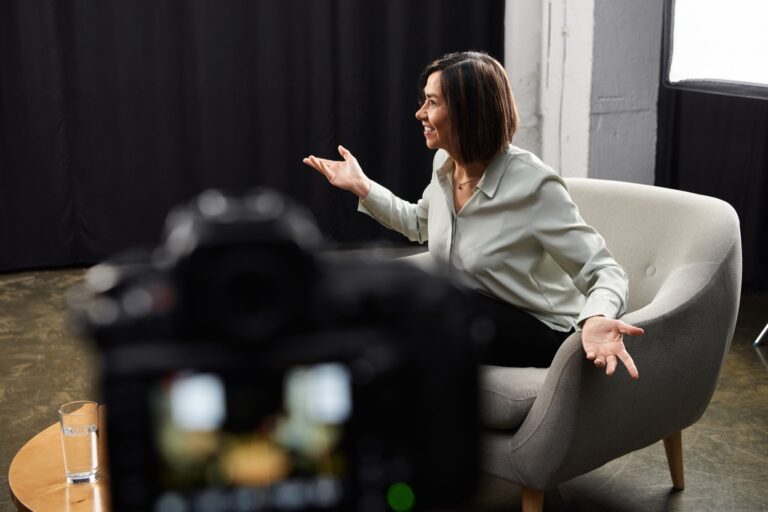
Look straight into the lens for a welcome video. It is a direct conversation with the visitor, so eye contact matters. An interview style, looking slightly off camera at a person, suits documentary-style films, but for a welcome it can feel as if you are talking to someone else.
You can, but prices change more often than videos. It is usually better to describe how you work and point people to your website for current fees, so the film doesn’t date the moment you adjust a package. If you do mention a price, plan to refilm that section when it changes.
More than you expect, and that is normal. Filming each part separately, with two or three takes of each, usually produces natural results without exhausting you. Most people relax noticeably after the first few minutes, so it is often worth refilming the opening once you have warmed up.
Prompts, framing, sound and simple ways through camera nerves, so UK life coaches can film short videos that sound like a real conversation.
Where stock images are fine on a UK coaching website, where they quietly cost you trust, and the licence and advertising rules worth knowing.
When a UK life coach needs a logo, name versus symbol, what it has to work on from profile pictures to workbooks, and what to know…
Four quick questions, and we’ll show you where we’d start. Your answers come straight to us with your message, so you won’t have to explain it twice.
A 30-minute introduction call on Microsoft Teams, Monday to Friday, 9am to 5pm. Your answers come with the booking, so we’ll be ready for you.
Prefer to talk it through? Make an appointment for a 30-minute call on Microsoft Teams, Monday to Friday, 9am to 5pm.
A closer look at the work behind each part of your plan.
We use analytics cookies to understand how visitors use our site. They are only set if you accept. Read our privacy policy.