FOR PODCASTERS
How to light a video podcast set
A practical UK guide to video podcast lighting: key, fill and practical lights, two-person desks, backgrounds, flicker under 50 Hz mains and a look that stays…

A practical UK guide to live podcast photography: what to capture, working with venues and stage light, staying silent, telling the audience and using the images.
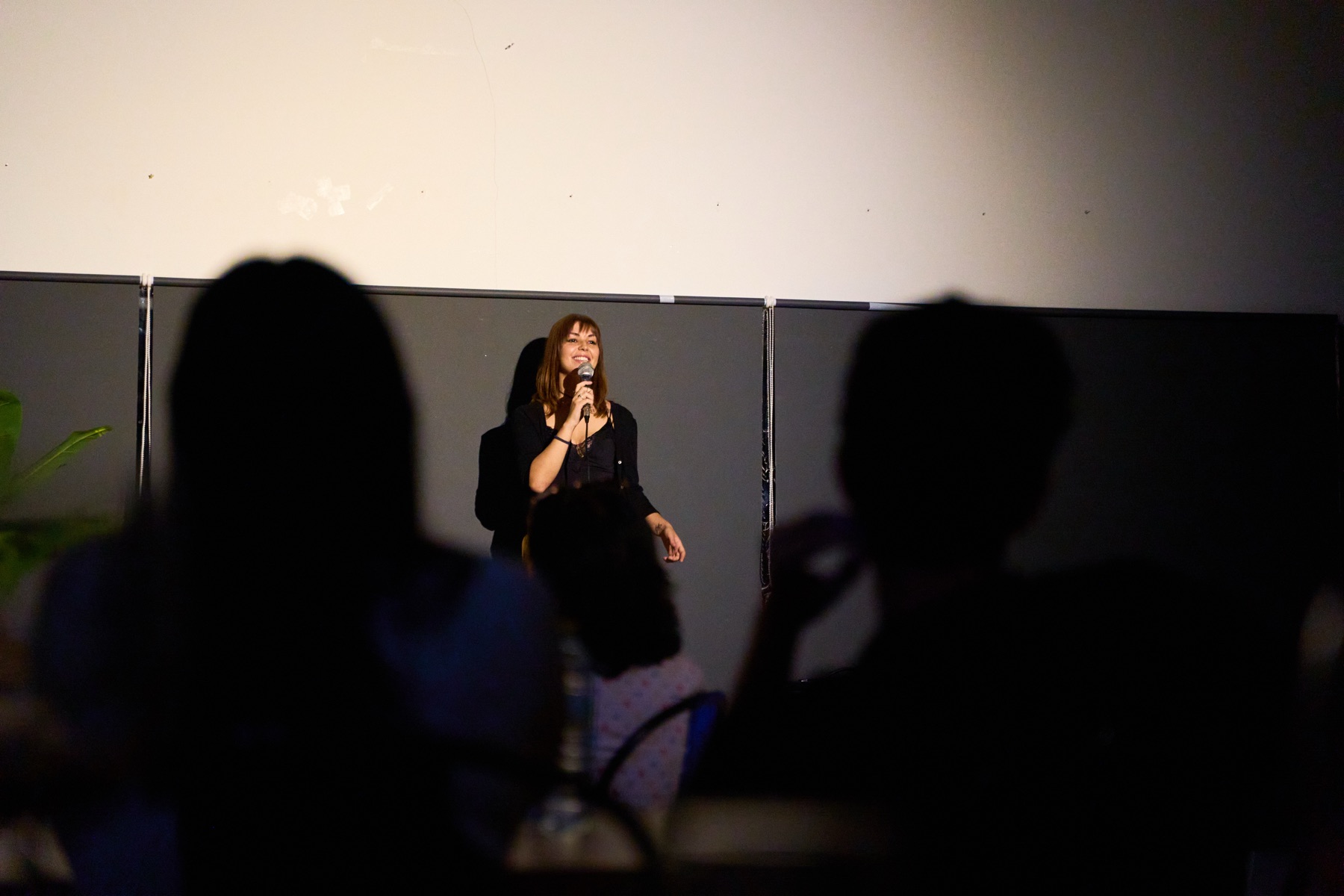
Live podcast photography captures the whole night, not just the stage: the room filling up, the hosts under the lights, the audience laughing, questions from the floor and the queue to say hello afterwards. Agree a shot list with your photographer, visit or research the venue, tell ticket holders that photographs will be taken, keep the camera silent near the microphones and get a first selection out the morning after the show.
Picture the day after your first live show. Your feed is full of it: the two of you mid-laugh under warm stage light, a row of strangers wiping their eyes, a listener holding up a mug with your logo on it in the signing queue. People who could not be there feel they missed something. People who were there tag themselves and tell their friends. Your next live date sells faster.
A live recording proves that your show has real people in a real room behind it, and photographs are what make that proof last. Here is how to plan the coverage so you get the atmosphere without anybody noticing the camera.
A live show is the closest your listeners get to sitting at the desk with you. Photographs of it do several jobs at once. They thank the people who came, they show everyone else what they missed, and they give sponsors and venues evidence that your audience turns up in person. For many shows the live episode becomes one of the most popular releases of the season, and it needs artwork that looks as lively as it sounds.
The images also outlast the night. A strong stage photo can become the poster for the next tour date, the header of your live shows page and the image in your media kit for years.
Think of the evening as a story with a beginning, middle and end. A good shot list covers:
Visit before the night if you can, or ask the venue for photos of the room with the stage lit. Find out where a photographer can stand without blocking sightlines, whether there is a balcony or side aisle, and when house lights go down. Ask about any venue rules on photography and whether staff need to know a photographer has access to backstage.
If you are filming the show as well, agree positions with the camera team early. Photographers and camera operators want the same spots, and a short plan on paper avoids someone standing in a shot during the best moment of the night. Our videography for podcasters and photography teams plan these positions together.
Stage light is beautiful and tricky. Small venues often use coloured LED washes that turn skin purple or green on camera, and mixed sources can make one host look warm and the other cold. A few habits help:
The audio is the episode, so the photographer must never be heard. Use a silent shutter for the whole show, stay well away from the stage microphones and avoid moving during quiet, serious moments. Crouch when crossing in front of the audience and keep to the agreed positions. The best live coverage feels invisible: the audience should remember the hosts, not the person with the camera.
That is how we approach photography for podcasters at live shows, working around the conversation rather than over it.
If someone can be recognised in a photograph, the ICO says it is usually considered their personal data. Its advice was written for schools, but the same principles apply sensibly to a live show: let people know in advance that photographs will be taken and how they will be used, and where possible give them a chance to opt out.
A simple approach is a line on the ticket page and confirmation email, a sign at the door and a brief mention at the start of the show. Offer a way to opt out, such as a seating area that will not appear in audience shots, and take extra care with any children in the room. When sharing crowd shots afterwards, choose ones where people look happy to be there.
In the UK, the first owner of copyright in a photograph is usually the person who took it, unless you agree otherwise in writing. Agree a licence before the night that covers social media, your website, podcast artwork, posters, press and paid advertising. If a venue or promoter wants to use the images, agree that too, so nobody is surprised.
Live shows are often part of a bigger push for a new season or tour. Our page on marketing for podcasters shows how photography, video, ads and the website can work together around one night.
We want you to look back at your live show and feel the room again. The team first came together behind co-founder Jack Cartwright, the bestselling author, photographing, filming and designing everything his books needed, and we now bring that care to podcasters on stage. Our photography for podcasters covers the stage, the audience and the queue afterwards, with a first selection delivered quickly. A clear brief, scope and fee are agreed before any creative work begins.
It depends on the length of the show and how much of the evening you want covered, but a well-edited set is better than hundreds of near-duplicates. Ask for a small selection the next morning for social media, then a fuller gallery a few days later that covers the arrival, the stage, the audience and the end of the night.
One person can do a little of both, but each job suffers when they try to do it all. For a recording you plan to release as a video episode, a separate camera team and photographer is safer. If budget is tight, decide which matters more for this show and brief accordingly.
Tell people in advance that photographs will be taken and how they will be used, on the ticket page, at the door and from the stage. The ICO advises giving people a chance to opt out where possible. Offering a seating area that will not appear in crowd shots is a simple, respectful way to do that.
Talk to the lighting technician about a warm, even wash on the stage and a little light on the front rows. A photographer with fast lenses and a camera that handles low light can then work without flash. Dark venues can produce the most atmospheric images, as long as faces are lit properly.
Aim for a first selection the next morning. The audience is still talking about the night, guests are keen to share, and the images help sell the next date. Agree the turnaround with the photographer before the show, and have captions and a thank-you message ready so you can post as soon as images arrive.
A practical UK guide to video podcast lighting: key, fill and practical lights, two-person desks, backgrounds, flicker under 50 Hz mains and a look that stays…
How to promote a podcast on Instagram in the UK: Reels from every episode, Stories on release day, guest collabs, trial reels and posting between seasons.
How to write podcast show notes that persuade people to press play and help episodes get found in search, with a simple template, timestamps and transcripts.
Four quick questions, and we’ll show you where we’d start. Your answers come straight to us with your message, so you won’t have to explain it twice.
A 30-minute introduction call on Microsoft Teams, Monday to Friday, 9am to 5pm. Your answers come with the booking, so we’ll be ready for you.
Prefer to talk it through? Make an appointment for a 30-minute call on Microsoft Teams, Monday to Friday, 9am to 5pm.
A closer look at the work behind each part of your plan.
We use analytics cookies to understand how visitors use our site. They are only set if you accept. Read our privacy policy.