FOR PODCASTERS
How to light a video podcast set
A practical UK guide to video podcast lighting: key, fill and practical lights, two-person desks, backgrounds, flicker under 50 Hz mains and a look that stays…

How to promote a podcast on Instagram in the UK: Reels from every episode, Stories on release day, guest collabs, trial reels and posting between seasons.
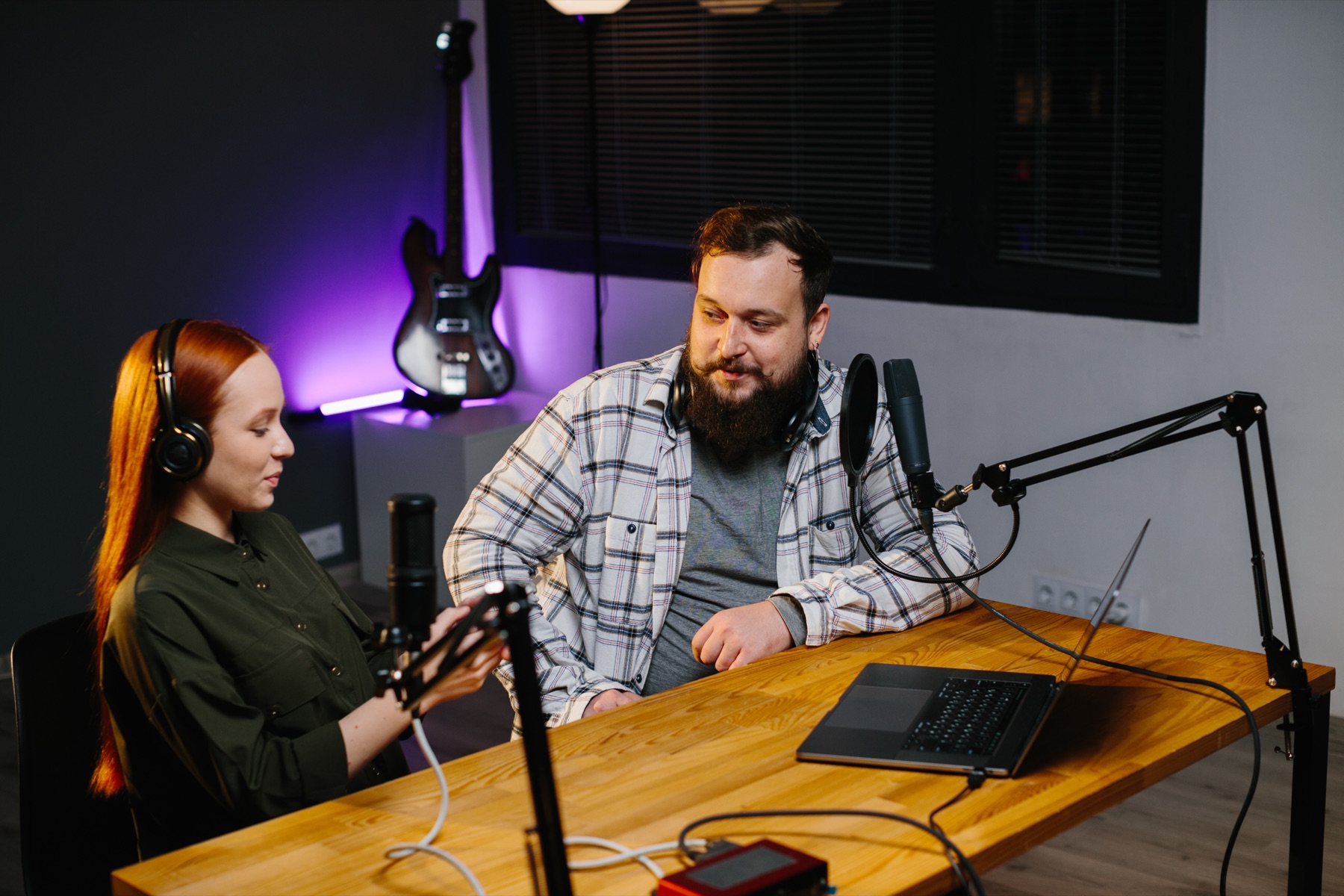
To promote a podcast on Instagram, treat it as the place listeners get to know the people behind the voices. Post two or three Reels cut from each episode, use Stories on release day and behind the scenes, invite guests as collaborators so posts reach their followers too, test new ideas with trial reels, and keep posting between seasons. Every post should leave the next listen one tap away.
Imagine opening Instagram the morning after an episode goes out. There’s a DM from a listener who says your guest’s story made them ring their dad. Someone has replied to your Story with a voice note of their own answer to your question. A comment under last week’s Reel reads, "Started from episode one this weekend." The show isn’t just in their ears any more. They feel part of it.
That feeling is what Instagram does best for a podcast. It won’t replace Apple Podcasts, Spotify or YouTube as the place people listen, but it is where they decide whether they like you. Here’s how to use it well without letting it swallow your week.
Because podcasts are now judged on a phone screen as much as in headphones. Ofcom found that the mobile phone is the main way people access podcasts for 64% of UK listeners, and that 68% listen to podcasts that also have video.
Instagram suits shows where personality matters: conversation and interview podcasts, wellbeing, culture, food, business owners with a point of view. It is where a potential listener sees what the hosts are like, how they laugh, what the set looks like, and who else is coming on. That is often what turns a maybe into a follow.
A feed of episode announcements gives people nothing to stay for. The accounts that grow mix a few kinds of post:
Episode announcements still have a place, but as one post among several, not the whole feed.
Choose moments that make sense to someone who has never heard the show: one idea, one story, one strong opinion. Open on the line that stops people rather than the build-up to it, burn in accurate captions for people watching on mute, and end on a complete thought. Our guide to podcast clips for social media goes into finding and cutting those moments in detail.
Length is less of a constraint than it was. Instagram said in January 2025 that it would begin showing reels up to three minutes long to people who don’t follow you, in the Reels tab and Explore. That said, most podcast moments land in well under a minute. Use extra length only when a story genuinely needs it.
If your show is audio-only, you can still post Reels. A well-designed audiogram, or a few seconds filmed to camera introducing the topic, works far better than nothing. We cover the options in do podcast audiograms still work?
Guests are your best route to new listeners, and Instagram’s collab feature makes sharing easy. You can invite up to five collaborators on one reel. Once they accept, the reel appears with them as well, and Instagram says the number of people who can see it increases.
A simple routine works well:
Guests who are handed something that makes them look good share far more often than guests who are sent a link.
Trial reels let you test an idea on people who don’t follow you before your followers see it. Instagram says trial reels are shown to non-followers first, stay off your followers’ feeds and Reels tab, and show views, likes, comments and shares after about 24 hours. You can then share a reel that performs well with everyone, or let Instagram do it automatically if it does well on views within the first 72 hours. You need a professional account to use them.
For podcasters, they are a low-risk way to try a new format: a different caption style, a hot take from a guest, a longer story clip. If it lands with strangers, it is likely to bring new listeners.
Stories are where your existing audience gets the nudge to listen. A calm release-day sequence might be:
Save release-day Stories to a Highlight for each season, so anyone landing on your profile can find recent episodes quickly.
This is where many shows go quiet, and it is the moment that costs them most. When the new season starts, they are relaunching to an audience that has drifted away. Keep the account warm with:
Fewer posts are fine between seasons. Silence is not.
Consistency beats volume. A weekly rhythm for a weekly show could look like this:
| Day | Post |
|---|---|
| Release day | Collab Reel with the guest, plus Stories with the link |
| Two days later | A second Reel or a carousel of takeaways |
| Later in the week | Behind the scenes, or a listener question |
| The day before the next episode | A teaser in Stories |
The work is easier when content is captured on recording days rather than scraped together afterwards. Photographing the set, filming a few vertical moments and grabbing a guest portrait takes minutes on the day and saves hours later. If the posting still eats into time you’d rather spend on guests and research, that is the point where social media for podcasters can take it off your hands.
Likes are pleasant, but they don’t tell you much. Watch profile visits, link taps, follows and saves, and how far people watch your Reels. Then look at what matters most: follower trends in Apple Podcasts and Spotify in the days after a strong post, and how many listeners say they found you on Instagram. Asking on the show is surprisingly effective.
Review once a month. Do more of the topics, guests and formats that bring follows, and quietly drop what doesn’t. If a Reel performs well organically, it is also the strongest candidate if you later decide to advertise your podcast.
We’d like your listeners to feel they know you before the next episode even starts. Our team grew out of the in-house crew that ran co-founder Jack Cartwright’s social media, video and design, and we now bring that joined-up approach to shows. With social media for podcasters, we capture recording days, cut the Reels, write captions in your voice and keep your Instagram steady between seasons, alongside the rest of our marketing for podcasters. A clear brief, scope and fee are agreed before any creative work begins.
Not always. If the show is built around you and supports your business or personal brand, posting from your own account often works better, because people follow people. A separate show account makes more sense for co-hosted shows, shows with rotating hosts, or when the podcast has a brand of its own that you may one day hand over or sell.
Generally no. Instagram is where people sample your show and decide whether they like you, not where they sit through an hour. Post short moments that make them want the rest, and send them to Apple Podcasts, Spotify or YouTube to listen or watch. Longer Reels can work for a complete story, but full episodes belong elsewhere.
They matter far less than the content itself. A clear caption that says what the clip is about, words on screen that match what people might be interested in, and a strong opening second do more for discovery than a block of hashtags. A few relevant ones do no harm, but don’t rely on them.
There is no universal answer, because it depends on when your listeners are on their phones. Instagram’s own insights on a professional account show when your followers are most active. Start there, post at a consistent time on release day, and test a couple of alternatives over a month before settling on a routine.
Expect a few months of steady posting before you see a clear pattern. Early on, the gain is often in the relationship with existing listeners: more replies, shares and guest reposts. New listeners follow as your Reels start reaching people who don’t follow you yet, which is why consistency matters more than any single viral post.
A practical UK guide to video podcast lighting: key, fill and practical lights, two-person desks, backgrounds, flicker under 50 Hz mains and a look that stays…
How to write podcast show notes that persuade people to press play and help episodes get found in search, with a simple template, timestamps and transcripts.
Should your podcast be on YouTube? How it works, the three ways UK shows do it, what changes when you go video, earning money and when…
Four quick questions, and we’ll show you where we’d start. Your answers come straight to us with your message, so you won’t have to explain it twice.
A 30-minute introduction call on Microsoft Teams, Monday to Friday, 9am to 5pm. Your answers come with the booking, so we’ll be ready for you.
Prefer to talk it through? Make an appointment for a 30-minute call on Microsoft Teams, Monday to Friday, 9am to 5pm.
A closer look at the work behind each part of your plan.
We use analytics cookies to understand how visitors use our site. They are only set if you accept. Read our privacy policy.