FOR PODCASTERS
How to light a video podcast set
A practical UK guide to video podcast lighting: key, fill and practical lights, two-person desks, backgrounds, flicker under 50 Hz mains and a look that stays…

Do podcast audiograms still work? When a waveform and captions earn attention, when video clips win, and how UK audio-only shows can look alive in the feed.
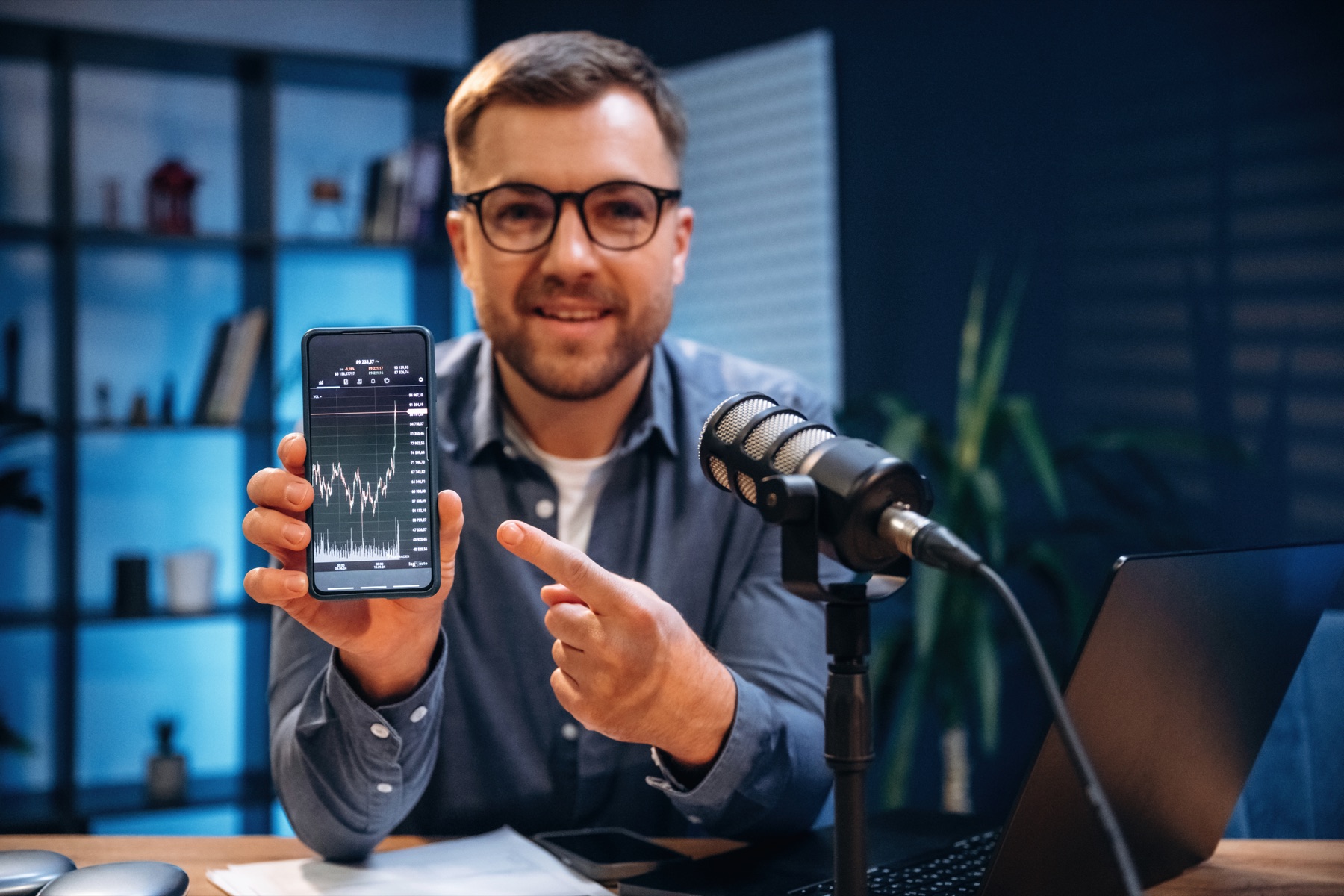
Podcast audiograms still work, but in a narrower role than they once had. A still image, a moving waveform and accurate captions are a quick way for an audio-only show to share a strong moment, and they suit quotable lines, Spotify Clips and Stories. In a feed full of filmed shows, a plain audiogram rarely holds attention as well as a face, so design yours properly and mix in a little video where you can.
Picture the morning after an episode drops. A listener has shared your audiogram to their Stories with a line of their own. Someone you’ve never met has replied with the exact sentence that made them laugh, and there are a few new names on your follower count by lunchtime. Nothing about the show changed. It simply looked as alive in the feed as it sounds in people’s ears.
That is entirely possible for an audio-only show. This guide covers what an audiogram is, where it still earns its place, where video clips do better, and how to make audiograms that look like your show rather than the template everyone else is using.
An audiogram is a short video made from a piece of audio. Usually it combines your cover art or a host photo, an animated waveform or progress bar, and captions that follow the words. It exists because social feeds are visual and mostly play with the sound off, so an audio file on its own has nowhere to go.
Making one is no longer the hard part. Apple’s promotional tools page for podcasters lists a partner tool for creating short video clips and audiograms with captions, waveforms and animations, and many hosting platforms and editing apps offer something similar. What separates a good audiogram from a forgettable one is the moment you choose and the way the frame is designed.
They work when they are doing the right job. Video now shapes how people meet podcasts: Ofcom found that 68% of UK podcast listeners listen to podcasts that also have video, and 44% find podcasts with video more engaging. In a feed full of hosts laughing at the camera, a static square with a wiggling line is easy to scroll past.
That does not make audiograms pointless. They are a sensible choice when:
Where they struggle is as the main growth engine for a personality-led show. If people come for the hosts, they want to see the hosts.
It helps to see the trade-off side by side.
| Audiogram | Video clip | |
|---|---|---|
| What you need | An audio file, artwork and checked captions | Camera footage of the conversation |
| Best at | Quotable lines, storytelling, audio-only shows | Personality, chemistry, reactions, humour |
| Time per clip | Minutes, once a template exists | Longer: framing, cuts, colour and captions |
| Weakness | Less human, easier to scroll past | Needs filming and a set that looks right |
Many shows end up using both: video for moments where expressions matter, audiograms for lines that land on their own. If you are weighing up cameras, our guide on how to film a video podcast sets out what it really takes. And if you already film, our guide to podcast clips for social media covers cutting them well.
Almost anywhere that takes short video, because to a platform an audiogram is simply a video file.
If you send your audio episodes to YouTube through your RSS feed, YouTube creates a video for each one using your show art as a static image. In effect, that is a full-length audiogram without the waveform. It gets an audio show onto YouTube and YouTube Music with very little effort, which is worth having.
It won’t compete for attention with filmed shows on its own, though. Short audiograms and clips are what draw people in; the static episodes are where they land.
The audiograms people recognise before they read a word share a look: the same colours, typefaces, caption style and layout every week. That consistency turns a feed of separate posts into something that feels like one show.
Design a small set of templates once, square and vertical, with space for a guest name and episode number. After that, each new audiogram takes minutes rather than an evening. Your cover art is the anchor for that look, and our guide to podcast cover art explains how to make it work at every size.
Two or three strong moments per episode is a steady rhythm for most shows, spread across the days until the next one drops. That gives each episode several chances to find someone new without lowering the bar. One sharp audiogram does more than five average ones.
The quickest way to find those moments is during the recording itself. Hosts who jot down a time code when a line lands save themselves an hour of scrubbing through audio later.
Look past views. Watch how far people get through each one, how often it is shared or saved, and above all whether follows and listens rise in the days after you post. If you post video as well, compare the two honestly.
If video consistently holds people for longer, that is a sign to film even a few moments of each recording. If your audiograms hold their own, keep going and refine what works: the topics, guests and opening lines that travel furthest. This is the kind of monthly review our social media for podcasters service builds in.
We want your show to feel as present in someone’s feed as it does in their headphones. Our team began behind the scenes for co-founder Jack Cartwright, keeping an author’s social media, video and design pulling in one direction. Now we bring the same care to podcasts: through social media for podcasters we design your audiogram templates, choose the moments worth sharing and post them on a steady rhythm, as part of wider marketing for podcasters. A clear brief, scope and fee are agreed before any creative work begins.
Usually 20 to 60 seconds, long enough for one complete thought and no longer. Spotify Clips must run between 15 and 90 seconds, and YouTube Shorts can be longer still, but few audiograms need the extra time. Cut the run-up, open on the strongest line and finish on a complete sentence so it feels satisfying rather than cut off.
Vertical for Reels, Stories, TikTok, Shorts and Spotify Clips, where it fills the screen. Square still works well in a feed and on LinkedIn. If you design your templates in both shapes from the start, you can export each moment twice in a couple of minutes and post it wherever it suits best.
Only if you have the rights to use it. Spotify says clips must not contain copyrighted music unless you own the rights, and other platforms have their own rules on licensed audio. Your own theme music, if you commissioned or licensed it for this use, is usually the simplest choice, kept low under the speech.
It is good practice to agree at booking that the conversation will be recorded and used in clips and promotion, and to keep a note of that agreement. Most guests welcome audiograms because they promote them too. If a guest asks for a particular moment not to be shared, respect it.
For a weekly show, often yes, because they save time on captions and exports. The tool matters less than the template and the judgement behind it. Whatever you use, check the captions by hand, use your own fonts and colours rather than the defaults, and choose moments a person would actually stop for.
A practical UK guide to video podcast lighting: key, fill and practical lights, two-person desks, backgrounds, flicker under 50 Hz mains and a look that stays…
How to promote a podcast on Instagram in the UK: Reels from every episode, Stories on release day, guest collabs, trial reels and posting between seasons.
How to write podcast show notes that persuade people to press play and help episodes get found in search, with a simple template, timestamps and transcripts.
Four quick questions, and we’ll show you where we’d start. Your answers come straight to us with your message, so you won’t have to explain it twice.
A 30-minute introduction call on Microsoft Teams, Monday to Friday, 9am to 5pm. Your answers come with the booking, so we’ll be ready for you.
Prefer to talk it through? Make an appointment for a 30-minute call on Microsoft Teams, Monday to Friday, 9am to 5pm.
A closer look at the work behind each part of your plan.
We use analytics cookies to understand how visitors use our site. They are only set if you accept. Read our privacy policy.