FOR AUTHORS
What Should Authors Post on Social Media Between Releases?
What should authors post between releases? A balanced mix of story, process and reader posts, series reminders, countdowns and a weekly plan.

The thinking behind marketing for UK authors: what really sells books, what every author should own, the UK rules to follow and where to spend limited time and money.

Marketing for authors works best when it’s built around readers, not one launch. Get the cover and description right and collect reviews. Own a direct line to readers through a website and mailing list. Show up regularly on one or two channels, and use ads to push what already sells. Treat marketing as a habit alongside writing.
Hardly anyone starts writing because they want to be a marketer. But the day a book goes on sale, the questions start. Should I be on TikTok? Do ads work? Why did launch week go so well and then everything just stop? For a lot of UK indie authors it begins to feel like a second job.
This guide is about the thinking behind marketing for authors: what really sells books, where to spend limited time and money, and what you can safely ignore. If you’d like the step-by-step version, our step-by-step plan for marketing a self-published book tells you what to do first.
Take away the tactics and book sales depend on three things working together:
Most marketing problems turn out to be one weak link in that chain. Pour more visibility into a page that doesn’t convert and you just lose money faster. Fix conversion first. Everything after it gets cheaper.
Because the launch was the whole plan. A burst of posts and a newsletter, maybe a promotion too, can give you a strong first week, but if nothing comes after it, sales slide back to where they started. Authors whose books keep selling plan month two and month six as carefully as launch day. They send regular emails and keep posting. Their ads tick over in the background, and the next book is already on its way. Our book launch timeline covers the weeks before and after release.
Social platforms and retailers can change their rules, algorithms or fees overnight. A few things you own protect you from that.
Use the one your readers use and you can keep up. Showing up regularly beats being everywhere. One platform used well for a year will do more for you than five used in fits and starts. Facebook still suits many fiction genres and older readerships. Instagram suits visual genres and bookish communities. Short-form video on TikTok, Reels or Shorts can reach new readers fast, especially if you’re comfortable on camera.
“Buy my book” rarely works. What works is the world of the book and the writing life around it. Post about your characters and settings. Share behind-the-scenes moments and how readers react. Give people a reason to follow you and they’ll notice when there’s something to buy.
Keep at it and the numbers move. On our co-founder Jack Cartwright’s Facebook page, which our team runs, followers grew from 4,664 to 5,789 between July and October 2026, and a single reel posted on 27 July reached 53,827 impressions (figures from Metricool).
Not on day one. Most authors who sell at scale do use it, though. Ads let you pick exactly who sees your book, so you aren’t just hoping the algorithm shows it to the right people. There are two main routes. Amazon’s own ads reach readers while they’re shopping, and Meta ads on Facebook and Instagram reach them while they scroll. Both reward books that already convert, and both will happily drain a budget if you leave them running without checking. We go into Amazon properly in Amazon ads for authors.
Your author brand is the promise readers keep coming back for. It’s the kind of story you tell and the feeling it leaves, plus how instantly someone recognises one of your books. You see it in covers that look like a set and a voice people recognise in your emails and posts. Your website should look like it belongs to the same author. A strong brand makes every launch easier because readers are already waiting. We cover how to build an author brand in a separate guide.
Two rules trip authors up more than any others. The first is email. In the UK you generally need specific consent before you send marketing emails, and every email needs a way to unsubscribe, according to the ICO’s guidance on electronic mail marketing. Build your list from readers who chose to join. Contacts you just happen to have don’t count.
The second is reviews. Since April 2025, UK law treats fake reviews, and reviews that hide an incentive, as a banned practice, which makes them automatically unfair and illegal. Sending advance copies to early readers is fine as long as they’re free to post an honest review. Retailers have their own review rules too, so check those before you start.
Enough to stay consistent. Never so much that the next book stalls, because for most fiction the next book is the strongest marketing you have. A few focused hours a week on your list and one social channel, plus any ads, is a realistic place to begin. If marketing keeps eating into writing time, or you dread it, that’s usually the sign to bring in an experienced marketing team.
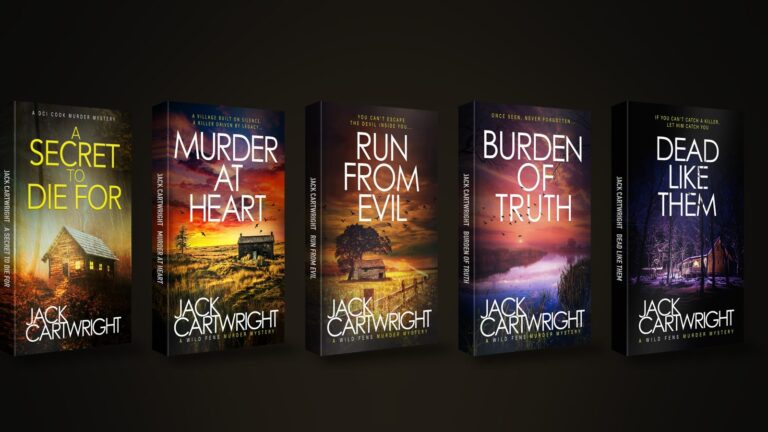
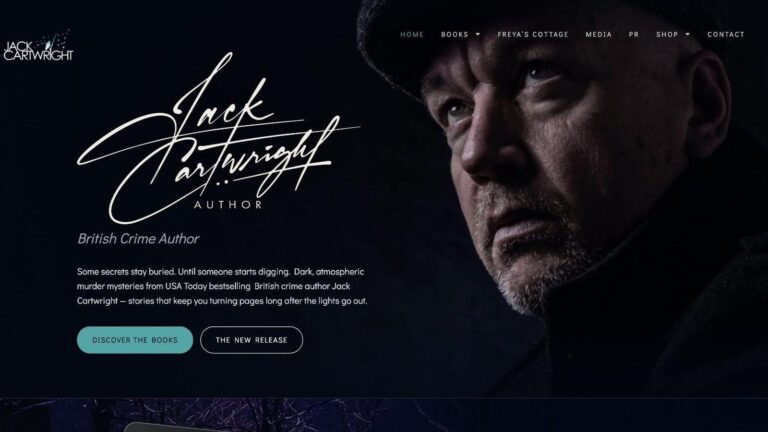
Our team started life as the in-house team for our co-founder, the USA Today bestselling author Jack Cartwright. We handled his social media and videos, along with his ads and book covers. We built his website too, so he could get on with writing. We can run your social media, plan and manage launch and reader ad campaigns, and build the website all your marketing points to. We agree a clear brief, scope and fee with you before any creative work begins. For the full picture, see how we market self-published authors.
Start before the book is finished. Set up your mailing list and register your author domain while you’re still writing, and start sharing how it’s going. By launch day you’ll have people who already care.
Yes, a little. Publishers handle some marketing. Increasingly, though, they expect authors to bring their own audience. A website and mailing list, plus an active social presence, help you sell more copies and make you a better prospect for the next deal.
The best marketing for a first book starts with a professional cover and a strong description. After that, set up a mailing list, pick one social platform you enjoy and plan the launch. Ads work better once early readers have shown that people who find the book go on to buy it.
Yes. Every reader who finishes book one is a likely buyer of book two, so marketing the first book markets the whole series. It makes advertising more affordable too, because each new reader is worth more to you.
Yes, all of it or just the bits you least enjoy. Many authors keep the creative voice and hand over the planning and design, along with scheduling, ads and reporting. What counts is working with a team that knows books and readers, not one that only knows social media in general.
What should authors post between releases? A balanced mix of story, process and reader posts, series reminders, countdowns and a weekly plan.
Learn how to give every book in a series a consistent look, with colour per book, clear numbering, box set covers and refreshes that help read-through.
Why indie authors sell ebooks, paperbacks and audiobooks from their own site, how delivery works, and what to check on VAT and KDP Select first.
Four quick questions, and we’ll show you where we’d start. Your answers come straight to us with your message, so you won’t have to explain it twice.
A 30-minute introduction call on Microsoft Teams, Monday to Friday, 9am to 5pm. Your answers come with the booking, so we’ll be ready for you.
Prefer to talk it through? Make an appointment for a 30-minute call on Microsoft Teams, Monday to Friday, 9am to 5pm.
A closer look at the work behind each part of your plan.
We use analytics cookies to understand how visitors use our site. They are only set if you accept. Read our privacy policy.