FOR AUTHORS
How to Plan Series Book Cover Design That Keeps Readers
Learn how to give every book in a series a consistent look, with colour per book, clear numbering, box set covers and refreshes that help read-through.

What should authors post between releases? A balanced mix of story, process and reader posts, series reminders, countdowns and a weekly plan.

What should authors post on social media? A mix of things, with very little selling. Between releases, rotate posts about characters and settings, glimpses of your writing process and reader reactions (shared with permission). Add series reminders and your next cover or release date. Keep most posts about the story. A simple weekly plan keeps it manageable.
The hardest part of author social media has nothing to do with the platform. It’s the blank screen on a Tuesday when the book is out and the next one is half written, and there’s nothing to announce. At that point most authors either go quiet or post the buy link yet again. So what should authors post on social media when there’s no news? If you’d sooner hand it over, see our social media for authors service.
The fix is a small set of post types you can repeat, each with its own job, that you can come back to week after week. This guide lays out that mix. It finishes with a simple weekly plan you can adapt to your genre and the time you’ve got.
Between releases you’re trying to keep readers interested in your world while they wait, and to show it to new readers who might start at book one. Sort your posts into four groups:
As a rule of thumb, most of your posts should be story and process posts. Use announcements and links sparingly. People follow authors for the books, so give them more of the books. If you write a long-running series, our guide to building an author brand explains how consistent themes make all this easier.
These tend to be the easiest posts to make and the ones people share most, because each one is a small taste of the book. For every main character you can post a short profile: their role, one flaw, one line they’d say. For settings, a photo of the real place that inspired the book, or a map, gives a crime or fantasy series a sense of place.
Ideas that work in any genre:
Keep spoilers out. If a post would only make sense to someone who’s finished the book, save it for your reader group and keep it off your public feed.
Readers are curious about how a book gets made. Process posts show you’re working on the next one without needing anything finished to show. Share word-count milestones, or the research that took you somewhere strange. Post an edit note with a line crossed out. Show the playlist, or the desk where the draft got written.
These posts are quick to make because they’re what you’re doing anyway. If you also make video, short clips of you talking about the book can go out on several platforms. Our guide to book trailers and author videos covers what’s worth filming.
One line from a real reader often persuades people more than anything you could say about your own book. Ask before you quote a review or repost a photo. Credit the reader, and use their words exactly as written. Never edit a review to make it sound more positive. UK law bans fake reviews and concealed incentivised reviews, so if a reader got a copy in return for a review, or any other benefit, that needs to be clear. If creators post about your book for you, read the ASA’s advice on when a post must be labelled as an ad.
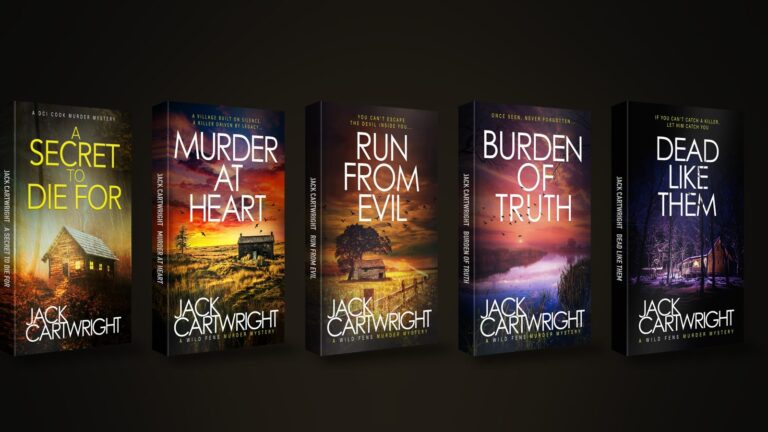
Readers forget which book comes next. A simple graphic with the reading order, the cover of book one and a note on where to start helps new readers begin in the right place and nudges existing readers on to the next title. This is where read-through comes from: people finishing book one and moving on to book two. Post it often. Always pair it with a link to one page that lists the whole series.
As a release gets close, change gear. A cover reveal and an excerpt give readers a reason to pay attention. So do a pre-order link and a short countdown in the final week. Keep it to a few clear posts. Don’t post the same graphic every day. Our book launch plan shows how these fit into a full timeline.
A Facebook reader group is a different sort of space. It’s for people who already like your books and want to talk about them, so keep public promotion out of it. Use it for early looks at covers and polls on titles. Share sneak-peek excerpts there, open up spoiler-friendly discussion and thank your most active readers. Set a few simple rules and keep it friendly. Drop in regularly. Members who feel included become your most reliable early readers, and they’re often the first to leave reviews. Our guide to your author mailing list works alongside the group, because a list reaches readers that a group or feed may miss.
Start with three or four posts a week on the one or two platforms you use most. Treat this as a template. Swap the days around to suit you, and drop anything you can’t keep up.
| Day | Post type | Example |
|---|---|---|
| Monday | Process | Word count, research find or a photo of where you wrote |
| Wednesday | Story | A character profile, a setting photo or a quote graphic |
| Friday | Reader | A reader review or photo, shared with permission |
| Sunday | Series or announcement | Reading order, a cover, a release date or a link to your list |
In the Facebook reader group, add one conversation starter a week, like a poll or a question about a character. In the last fortnight before a release, swap one of the slots for countdown posts. Batch the content once a month, ideally in one sitting with your notes and photos in front of you, so the weekly job shrinks to scheduling posts and replying to comments.
Our team started as the in-house team for our founder, the USA Today bestselling author Jack Cartwright. We handled his social media and videos, along with his ads, book covers and website. Our social media management for authors plans your content around your releases and covers BookTok and Bookstagram as well as Facebook reader groups. We write in your own voice, so your feed sounds like you. For the wider picture, see how we market self-published authors. We agree a clear brief, scope and fee with you before any work begins.
Three or four posts a week is a realistic place to start, as long as you can keep it going. Regular posting beats bursts of activity. Post more in the weeks around a launch, then ease back to a lighter pattern while you write the next book.
Only a small share. There’s no fixed ratio, but most of your posts should be about the story and characters, your process and your readers. Keep the posts asking people to buy or sign up in the minority. If every post is a link, readers have no reason to follow you. Give them something worth reading, and make the link easy to find.
Pick the place where your readers already are and where you’ll enjoy posting. Romance and fantasy readers are often visual and active on short video and Instagram, while lots of crime and thriller readers gather in Facebook groups. Choose one main platform, add a second if you have time, and send everyone to your website.
Yes, with permission. Ask the reader, credit them and quote their words accurately. Don’t pay or reward people for positive reviews. If a reader got a free copy or any other benefit, disclose it. An honest opinion is the whole point.
That’s exactly what story and process posts are for. Share a character or a setting, a quote, a reader photo, or a reminder of the series order. Between releases your backlist is your best content, because new readers are finding it every week.
Learn how to give every book in a series a consistent look, with colour per book, clear numbering, box set covers and refreshes that help read-through.
Why indie authors sell ebooks, paperbacks and audiobooks from their own site, how delivery works, and what to check on VAT and KDP Select first.
How to design the page that gives away your free book: headline, cover, form, UK consent basics, the welcome sequence and where readers come from.
Four quick questions, and we’ll show you where we’d start. Your answers come straight to us with your message, so you won’t have to explain it twice.
A 30-minute introduction call on Microsoft Teams, Monday to Friday, 9am to 5pm. Your answers come with the booking, so we’ll be ready for you.
Prefer to talk it through? Make an appointment for a 30-minute call on Microsoft Teams, Monday to Friday, 9am to 5pm.
A closer look at the work behind each part of your plan.
We use analytics cookies to understand how visitors use our site. They are only set if you accept. Read our privacy policy.