FOR PODCASTERS
How to light a video podcast set
A practical UK guide to video podcast lighting: key, fill and practical lights, two-person desks, backgrounds, flicker under 50 Hz mains and a look that stays…

The podcast host photos every UK show needs, from cover art and app profiles to guest spots and media kits, and how to plan a shoot that feels like you.
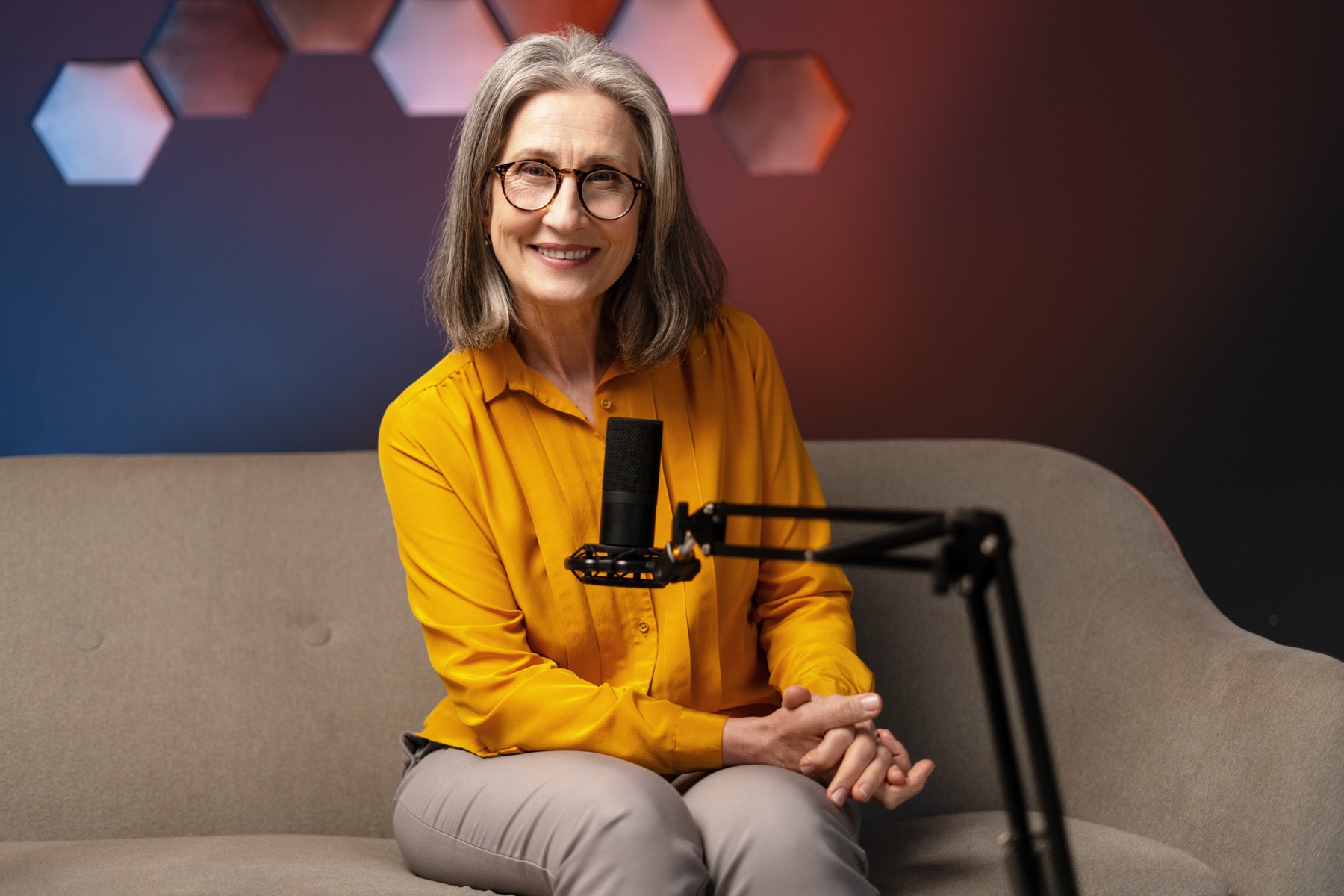
Podcast host photos are the small set of portraits that represent you wherever your show appears. Most hosts need a square image planned for cover art, a close portrait for app and social profiles, a wider shot on the recording set, a co-host image if you share the mic, and a few relaxed frames for guest spots, press and your media kit. Plan every shot around how it will be cropped, and update them when the show changes.
Picture a stranger scrolling past your show in Apple Podcasts, pausing on your face and pressing play because you look like someone they would enjoy an hour with. By the time they hear your voice, they already feel they know you a little. When a host who has booked you sends a thank-you note, the photo you sent across makes their announcement look generous, and you share it gladly.
That is what good host photos do. They are not vanity. They carry the warmth of the conversation into places where nobody can hear it yet: a grid of thumbnails, a guest line-up, a sponsor’s inbox. This guide covers which images to ask for, how to make them work at tiny sizes and how to keep them feeling like you.
Listeners decide what to try with their eyes before their ears. Apple describes show cover art as the image that helps listeners identify key information such as the title and host, so for many shows your face is part of the brand from the start.
Those decisions mostly happen on a small screen. Ofcom found that for 64% of people, a mobile phone is their main way of accessing podcasts. A portrait that looks lovely as a print can turn into a blur of shoulders and background at the size of a fingertip, which is why host photos need planning rather than a quick snap in front of the mic.
A single shoot can cover most of the year if you go in with a shot list. These are the images most UK shows end up using:
Apple asks for show covers at 3000 by 3000 pixels in PNG or JPG, and warns that the play button, labels and subscription offers can cover parts of the artwork, so key elements should sit inside its safe area. It also advises keeping the title legible and limiting other text. A photo built for that square will have:
Episode artwork is different. Apple suggests keeping recurring elements consistent and varying elements like guest photos, and it advises against putting your logo or any text in episode art, because the titles appear underneath. That is a good reason to have a bank of your own portraits ready to pair with each guest.
Often, yes, and ideally on a recording day. The set gives context that a plain backdrop cannot: the mug, the headphones, the books on the shelf, the red ON AIR light. Listeners who watch on YouTube will recognise it instantly.
A studio session has its place too. It gives you clean, controlled portraits for the cover and press, and it suits hosts who record remotely from a box room they would rather not show. Many shows book both: a short studio session for the hero portraits, then coverage on the next recording day for the life around the microphone. That combination is how we usually approach photography for podcasters, because it gives you control and candour from the same season.
Treat the pair as the subject, not two people standing next to each other. Ask for a few frames where you are talking to each other rather than the camera, because that is what the show sounds like. Then make sure each host has a strong solo portrait with matching light and edit, so a guest booking for one of you still looks like part of the same programme. The same thinking applies to the people who sit opposite you, which we cover in our guide to podcast guest photos.
Watch the balance. If one co-host always ends up in the foreground, listeners notice. Alternate who sits nearer the lens across the set-ups.
In the UK, when you commission photography, the first owner of copyright is usually the person who created it, unless you agree otherwise in writing. In practice that means agreeing a licence before the shoot that clearly covers podcast apps, YouTube, your website, social media, press, printed posters and any paid ads.
Think about other people’s shows too. When you appear as a guest, the host will want a portrait for their artwork and announcements, so check your licence lets you pass images to them for that purpose. A short press page on your website with two or three approved portraits saves a lot of emails.
Update them when they stop looking like you, when the show changes its look, or at the start of a new season if you want a fresh announcement. A new cover, a rebrand or a move to a filmed set are natural moments. Keep older images in rotation for back-catalogue posts so the archive still feels consistent.
If the show supports your business, it helps when your podcast portraits and your wider brand photography feel related. Our marketing for podcasters page shows how photos, video, artwork and the website can work as one look.
Working with us should feel like being photographed by someone who has already listened to your show. We started as the in-house team behind co-founder Jack Cartwright’s books, shooting and designing everything he needed so he could keep writing, and we bring that same joined-up care to podcasters. Our photography for podcasters covers host portraits, cover shoots and recording days, edited to one consistent look. A clear brief, scope and fee are agreed before any creative work begins.
A focused shoot that delivers fifteen to thirty edited images covers most shows for a year: a cover option, two or three profile portraits, on-set shots, co-host frames and a handful of relaxed in-between moments. What matters more than the number is that each image has a job, such as cover art, profiles, guest spots or press.
Yes, if it still looks like you and suits the tone of the show. A corporate headshot against a grey backdrop can feel stiff next to a warm, conversational podcast, though. If listeners would be surprised when they meet you on video or at a live show, it is probably time for photos that match the show.
It helps when the show is built around you and your personality, and Apple notes that cover art should help listeners identify key information such as the host. For panel shows, fiction or shows with rotating hosts, a strong graphic cover may work better. Either way, test the design at thumbnail size before you commit.
Send one square portrait and one landscape portrait at high resolution, a short bio, your correct name spelling and your preferred links. Make sure your photography licence lets you share the images with other hosts for promotion. Hosts appreciate guests who make announcements easy, and it means the artwork about you looks the way you want.
On your recording set if it looks good on camera, in a studio for clean cover and press portraits, or on location somewhere that says something about the subject of the show. Many hosts combine a short studio session with photography on a recording day, so they get controlled portraits and natural, in-the-moment images from the same season.
A practical UK guide to video podcast lighting: key, fill and practical lights, two-person desks, backgrounds, flicker under 50 Hz mains and a look that stays…
How to promote a podcast on Instagram in the UK: Reels from every episode, Stories on release day, guest collabs, trial reels and posting between seasons.
How to write podcast show notes that persuade people to press play and help episodes get found in search, with a simple template, timestamps and transcripts.
Four quick questions, and we’ll show you where we’d start. Your answers come straight to us with your message, so you won’t have to explain it twice.
A 30-minute introduction call on Microsoft Teams, Monday to Friday, 9am to 5pm. Your answers come with the booking, so we’ll be ready for you.
Prefer to talk it through? Make an appointment for a 30-minute call on Microsoft Teams, Monday to Friday, 9am to 5pm.
A closer look at the work behind each part of your plan.
We use analytics cookies to understand how visitors use our site. They are only set if you accept. Read our privacy policy.